Ready-made temples solve the easy part of the problem. They look good in a photograph and arrive quickly to be installed. What they rarely do is match the exact wall and the idols a family already owns. A pooja temple for the home feels personal only when those details drive the design to match the current status. Small gaps to address, but they show every morning during prayer time.
Custom design starts from the room instead of the catalogue. A pooja temple for home can be drawn to the height of a niche and the number of idols on the steps. Everything after that, from the marble to the depth of the carving, follows those first decisions rather than a fixed template.
Close Enough Rarely Feels Right
Where Ready-Made Sizes Fall Short: A ready-made temple is built to standard sizes, so it rarely matches a particular niche or wall width. Designers who visit homes after delivery hear the same points again and again. The piece stands slightly proud of the recess, or the steps hold fewer idols than the family actually owns. Nothing is broken. It just never settles.
The Workarounds That Follow: A temple that does not fit its space invites workarounds, and workarounds last for years. A side stool appears for the thali. A cloth covers the gap at the base. Once the pooja room is tiled and the lighting is set, the custom option narrows, and the compromise quietly becomes permanent.
Every Dimension Can Shift to Suit the Room
Size Drawn to the Available Space: A custom temple is sized to the space it will occupy, which matters most in flats where every corner is already spoken for. Careful space planning sets how much depth the piece can take without blocking a walkway, and how much clearance sits above it for a bell or a light. Those two measurements shape everything else.
Deity Placement Planned around the Family’s Idols: Deity placement in a custom temple follows the idols a family already worships, rather than a fixed set of steps. The main deity takes the centre at eye level. Paired figures need width beside each other. Facing east or north while praying is the usual Vastu preference, and that decides which wall the temple can take.
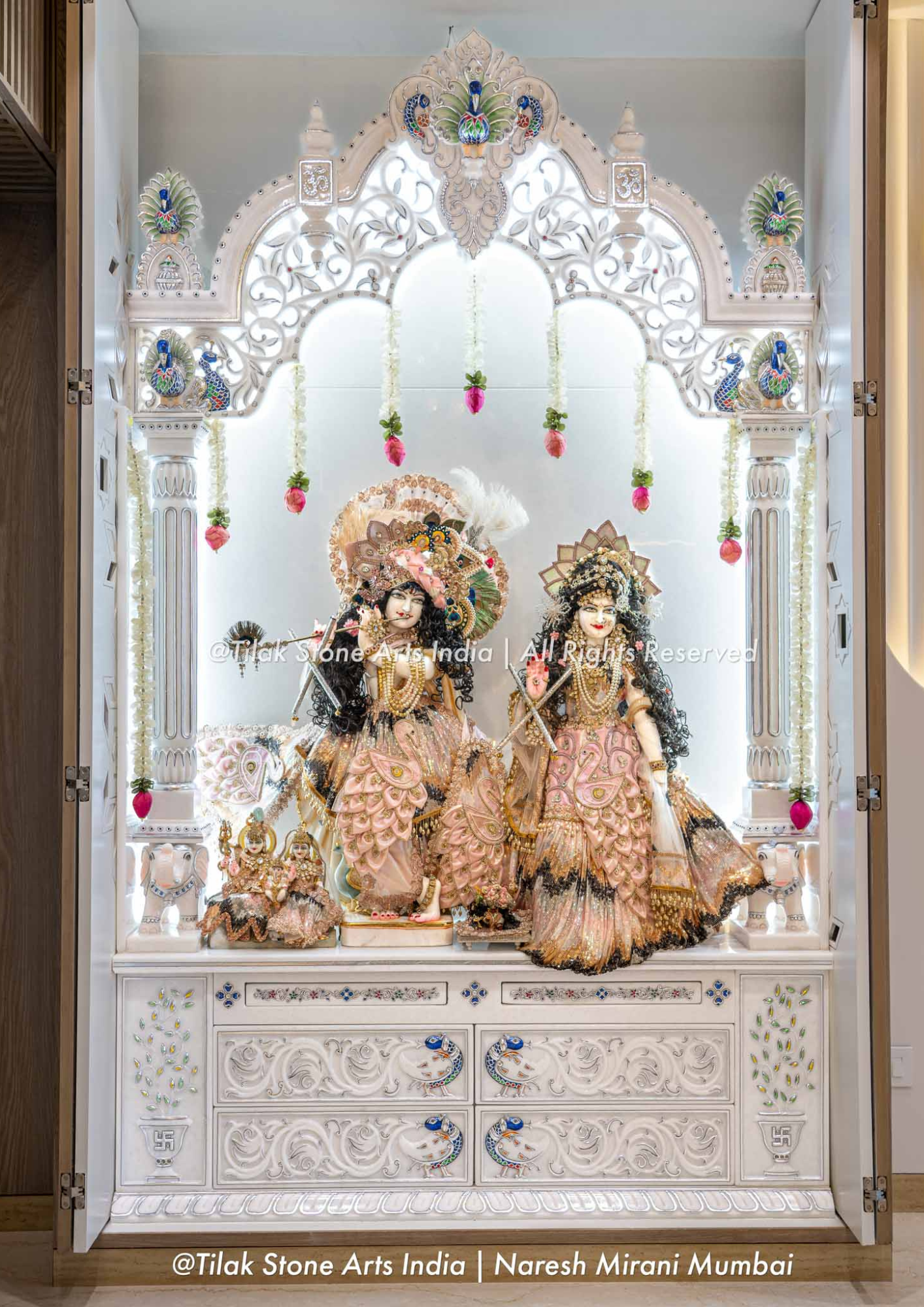
Storage and Materials Chosen Together: Storage and material choices work best when decided together, since a drawer or shelf has to sit inside the same design as the carving above it. White Vietnam marble carries the temple itself, valued for its even tone and fine grain. In the wider pooja room, other stones can join in, onyx for a backlit panel perhaps.
Detailing That Means Something to the Family: Detailing is where bespoke design shows its value, because motifs can be chosen for what they mean to the household. Some families ask for the flower a grandmother always offered, carved into the base. Others want a border echoing the pattern drawn at their doorway each Diwali. Small choices, and they change how the temple feels.
Seeing the Design before Anything Is Carved
What a Design Consultation Covers: A design consultation for a home temple starts with measurements and photographs of the room. Designers ask who prays and whether anyone sits on the floor for long. They look at the rest of the interior too, because the temple has to live beside it rather than compete with it. One conversation covers most of it.
From 2D Drawings to a 3D View: A 2D drawing confirms dimensions and proportions, and a 3D visual shows how the finished piece will look inside the actual room. Seeing a pooja temple for home rendered in place settles most decisions, because the family can judge arch height and carving density against their own walls. Changes at this stage take minutes. Once carving starts, they do not.
Ready-Made or Made to Order
When Ready-Made Still Makes Sense: A ready-made temple suits a standard space or a tight deadline. Buyers see the exact piece before paying, and delivery is quick. The limits are fixed proportions and fixed steps. That works until the family adds an idol or moves the shrine to a different wall. For a rented flat, it is a sensible choice.
Why Custom Holds Its Value Longer: A custom temple holds its value because it was made for one specific space and one family’s way of worship. Marble does not warp or fade, and a piece built in sections can be dismantled if the family moves house. A pooja temple for home designed around real measurements rarely needs replacing, which offsets the longer wait at the start.
Points to Raise at the First Meeting
Answers Worth Having Ready: Custom work goes smoothly when the family arrives with a few answers ready. Anyone planning a pooja temple for home can expect a designer to ask about the points below, and having them settled saves a round of revisions. None of it needs technical knowledge, only a tape measure and a clear idea of the daily routine.
- Measure the niche, including its depth, before anything else.
- Idol count decides the number of steps.
- Say whether prayers happen seated or standing.
- Note the flooring and wall finish already in place.
- Flag any motif with family meaning early.
A Shrine Shaped by Your Own Routine
A temple designed around one family stops being a piece of furniture and starts being part of the home. Waiting until the pooja room is finished leaves fewer choices and more compromises. Book a design consultation and bring the room measurements along. Ask for a 3D view before the first block is cut.