
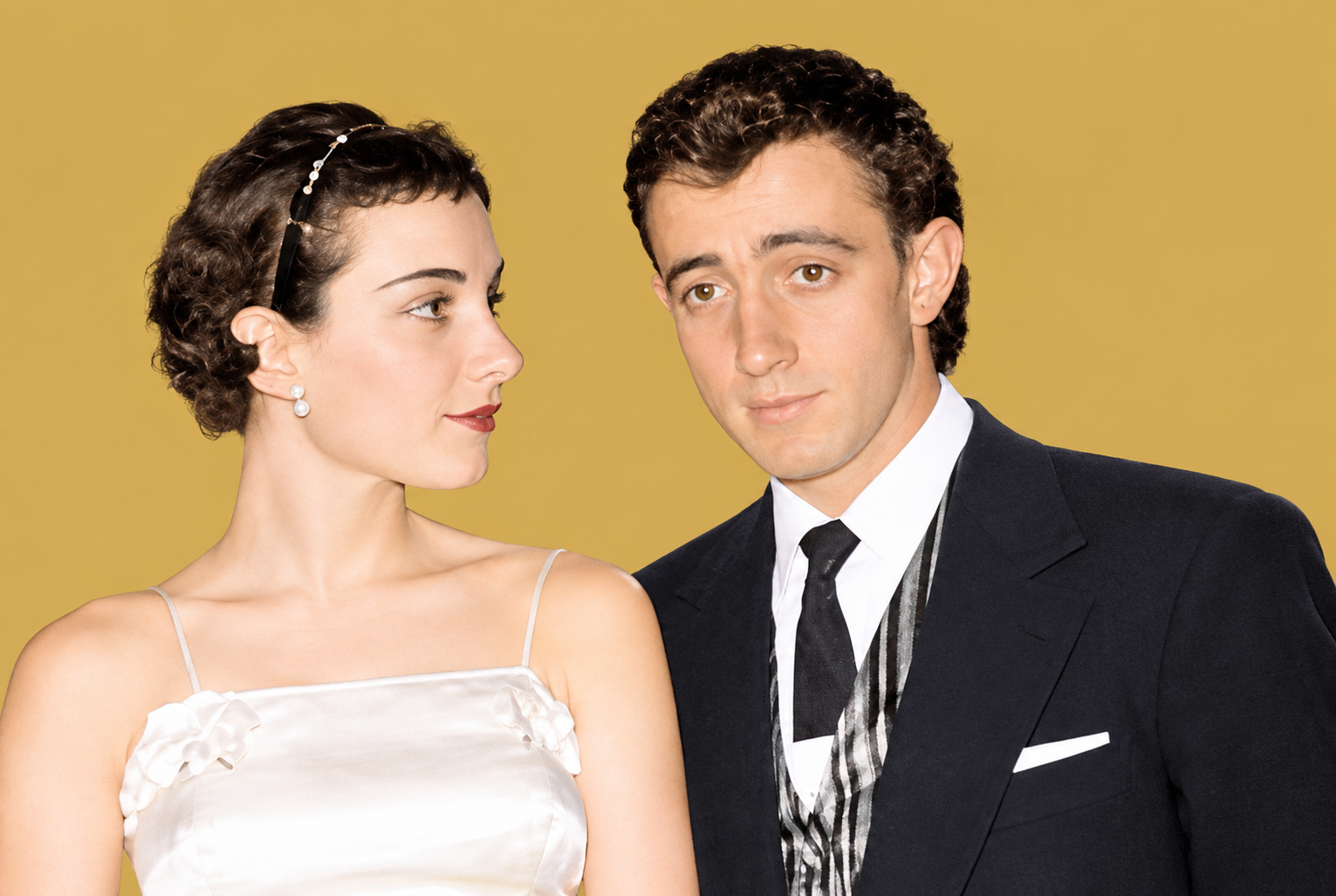
Harlene Rosen is best known for being the first wife of Woody Allen, the American comedian, writer, actor, and filmmaker whose career eventually became one of the most influential and controversial in modern entertainment. Rosen entered Allen’s life when both were very young, long before he became internationally famous for films such as Annie Hall, Manhattan, and Midnight in Paris. Their marriage ended years before Allen reached the height of his filmmaking career, but Rosen remained part of the historical record because of the way their relationship later became material for Allen’s comedy and because of the legal dispute that followed.
Unlike many people connected to famous entertainers, Rosen did not build a public career of her own. After her divorce, she largely disappeared from the entertainment spotlight and maintained a private life. As a result, reliable information about her later career, relationships, finances, residence, and day-to-day life is extremely limited. That lack of information is important because many online biographies repeat specific claims that are not consistently supported by strong sources.
What can be established with greater confidence is that Rosen was a young philosophy student when she married Allen in 1956, that their relationship deteriorated within several years, and that she later challenged Allen over remarks he made publicly about her. Decades later, she gave a rare message to biographer David Evanier for his 2015 biography of Allen, providing a much more reflective perspective on their shared past.
Quick Information Table
| Information | Details |
|---|---|
| Full name | Harlene Rosen, also identified in some records as Harlene Susan Rosen |
| Nationality | American |
| Associated with | Woody Allen |
| Known for | Being Woody Allen’s first wife |
| Marriage | 1956 |
| Separation | Around 1959 |
| Divorce | Sources commonly place it around 1961–1962 |
| Age at marriage | Approximately 16–17 |
| Woody Allen’s age | Approximately 20 |
| Education | Studied philosophy at Hunter College, according to biographical accounts |
| Children with Woody Allen | None publicly documented |
| Entertainment career | No established professional entertainment career |
| Legal dispute | Defamation action related to Allen’s public remarks |
| Later public appearance | Message to David Evanier’s 2015 biography |
| Current public profile | Extremely private |
| Current personal details | Largely undocumented |
Who Was Harlene Rosen?
Harlene Rosen was a young woman from New York who became connected with Woody Allen before he was a major celebrity. Their relationship began during a period when Allen was developing his career as a comedy writer and performer.
Allen was born Allan Stewart Konigsberg and eventually adopted the professional name Woody Allen. During the 1950s, he was working on comedy writing and developing the style that would later make him famous. Rosen was part of his personal life during this formative period.
Unlike Allen, Rosen never became a public entertainer. There is no reliable evidence that she established herself as an actress, comedian, filmmaker, or television personality. Her continuing public recognition comes almost entirely from her connection to Allen and the unusual history of their early marriage.
Early Life and Education
Reliable information about Harlene Rosen’s childhood is scarce. Modern online biographies frequently provide an exact birth year of 1940 and describe her as being from Brooklyn, but these details are not consistently supported by authoritative public records.
What is better established is her connection to New York and her education. Biographical accounts describe Rosen as a philosophy student at Hunter College during the period when she was married to Allen. A scholarly reference on American humorists also describes Allen as marrying his high-school sweetheart, Harlene Rosen, who was a 17-year-old philosophy major at Hunter College.
This detail is useful because it provides a glimpse of Rosen’s identity outside her later association with Allen. She was not simply a celebrity spouse. She was a young student pursuing an academic interest while Allen was beginning to develop his professional identity.
Some modern sources also associate her with music and piano. However, these details should not be expanded into claims that she had a professional musical career because the available evidence does not establish that.
How Harlene Rosen Met Woody Allen
Rosen and Allen were teenagers when their relationship began in New York.
Their relationship developed before Allen became an internationally known filmmaker. At the time, he was building a career in comedy writing, while Rosen was still very young and pursuing her own education.
Their early relationship eventually developed into marriage in 1956. This placed Rosen directly alongside Allen during an important transitional stage of his life, when he was moving from being an aspiring young comedy writer toward professional success.
The marriage therefore predates virtually everything for which Allen is best known today. Films such as Annie Hall, Manhattan, and Hannah and Her Sisters were still decades away.
Marriage to Woody Allen
Harlene Rosen and Woody Allen married in 1956.
The exact timeline is sometimes presented differently in online sources. The most widely cited account in Allen’s biography places the marriage from 1956 to 1959, while other biographies describe the divorce as being finalized around 1962. Wikidata also records the marriage as beginning in 1956 and ending in 1959.
The difference is largely related to the distinction between separation and legal divorce. Some accounts place the separation around 1959 and the final divorce several years later.
Allen was around 20 when they married, while Rosen was approximately 16 or 17. Their young age is one reason the marriage is often described as an early chapter in Allen’s personal history rather than a conventional celebrity marriage.
A Marriage During Allen’s Early Career
Their marriage coincided with Allen’s early professional development.
Allen was increasingly involved in comedy writing and eventually moved into stand-up comedy. The career he built during these years eventually transformed him into a major American entertainment figure.
Rosen’s life followed a different path. She did not become a celebrity and did not attempt to build a public identity around her husband’s emerging career.
That difference became especially important after the marriage ended.
The Breakdown of the Marriage
The relationship eventually deteriorated, and Rosen and Allen separated around 1959.
Their marriage later became a subject of Allen’s comedy. Allen incorporated aspects of his personal life into his stand-up material, and Rosen became one of the people referenced in his routines.
According to historical accounts, Allen referred to Rosen in his comedy as “the Dread Mrs. Allen.” Contemporary reporting also describes jokes he made about her cooking and other aspects of their marriage.
For Allen, these comments were part of the self-deprecating and personal style that became characteristic of his early comedy.
For Rosen, however, the situation was very different.
Harlene Rosen and the Defamation Dispute
One of the most significant parts of Rosen’s public history is her legal dispute with Allen.
After their marriage ended, Allen made public remarks concerning Rosen and an incident in which she had been sexually assaulted outside her apartment. He later discussed the episode in his comedy and in television appearances.
According to Allen’s own account, he made a joke about newspaper reports concerning the incident. Rosen subsequently sued him for defamation. The Woody Allen biography entry records the dispute and explains that Allen later discussed the lawsuit during his stand-up performances and interviews.
Historical reporting also describes the incident and Rosen’s decision to take legal action. The dispute is important because it demonstrates the tension between personal experience and comedy: something Allen regarded as material for a joke was something Rosen considered sufficiently harmful to challenge publicly.
Why the Dispute Is Significant
The case is more than a strange anecdote from Allen’s early career.
It raises a broader question about the boundaries of comedy when performers use real people and painful personal experiences as material.
Allen’s comedy frequently drew from his own relationships, insecurities, family life, and experiences. That approach became a major component of his public persona.
But Rosen did not have the same control over the audience’s interpretation of those jokes. She was not a performer and had not chosen to make her private experiences part of a public comedy routine.
For that reason, the dispute remains one of the more important documented episodes in discussions of Rosen’s relationship with Allen.
Life After the Divorce
After her marriage ended, Harlene Rosen largely withdrew from public attention.
This is one of the most important facts to understand when researching her.
There is no substantial public record showing that she attempted to become a celebrity, wrote a major autobiography, developed an entertainment career, or regularly appeared in interviews discussing Allen.
Instead, much of her later life remained private.
This creates a major difference between Rosen and Allen. Allen continued working for decades, becoming a filmmaker, actor, writer, comedian, and public figure. Rosen largely avoided that world.
Reliable information about her later employment, relationships, finances, residence, and personal activities is limited. Some online sources provide detailed claims about these subjects, but those claims are not consistently supported by authoritative evidence. A careful biography should therefore avoid presenting them as established facts.
Did Harlene Rosen Have Children?
There is no publicly documented evidence of children from Rosen’s marriage to Woody Allen.
Major biographical accounts of Allen’s personal life do not identify children from his marriage to Rosen. His later family history involved relationships and marriages that occurred many years after Rosen’s relationship with him.
It is important not to speculate about Rosen’s broader family life after the divorce because reliable public information about that period is limited.
Harlene Rosen’s Rare Return to the Public Record
One of the most interesting developments in Rosen’s story occurred in 2015, more than five decades after her marriage to Allen.
Biographer David Evanier was researching his book Woody: The Biography. Evanier explained that he spent more than a year trying to locate Rosen. He eventually succeeded and received a message from her intended for Allen’s 80th birthday.
Her involvement was significant because she had remained largely silent about Allen for decades.
The publisher’s material for the biography specifically highlighted the fact that Evanier had interviewed Allen’s first wife, who had not commented publicly on him since their marriage ended in the 1960s.
A More Reflective Perspective
Rosen’s message offered a different perspective from the angry and difficult story associated with the end of their marriage.
Rather than simply repeating old grievances, she reflected on their youth and the years they spent together while growing into adulthood.
This does not erase the earlier dispute or change the historical record. Instead, it shows that Rosen’s perspective had evolved over the decades.
Her contribution is particularly valuable because so much of the historical discussion surrounding the relationship had previously been presented through Allen’s comedy, interviews, or biographies written from an outside perspective.
What David Evanier’s Biography Added
David Evanier’s Woody: The Biography was published in 2015 and included interviews with numerous people connected to Allen.
The book’s significance for Rosen is that it provided one of the rare occasions when her own perspective became part of a substantial biographical work about Allen.
Evanier specifically identified Rosen’s participation as one of the notable discoveries of his research. He described her message as a birthday message for Allen and included it in the biography.
The book therefore helped move Rosen’s story beyond the limited image of her as simply Allen’s first wife.
Harlene Rosen’s Relationship With Fame
Rosen’s story is unusual because she became associated with fame without apparently seeking it.
Many people connected to celebrities eventually become public personalities themselves. Some pursue interviews, write books, participate in documentaries, or use their connections to establish careers.
Rosen followed almost the opposite path.
After her relationship with Allen ended, she maintained a remarkably low public profile. Even decades later, when a biographer wanted to speak with her, locating her required considerable effort.
That privacy is arguably one of the defining characteristics of her public story.
Where Is Harlene Rosen Now?
There is no reliable public record that provides a detailed account of Harlene Rosen’s current life.
Modern biography pages sometimes claim to know her present location, relationship status, career, financial situation, or other personal details. However, many of these claims are repeated without strong documentation.
The most responsible conclusion is that Rosen has continued to live privately and that her current day-to-day circumstances are not well documented in reliable public sources.
There is also no strong evidence supporting a specific current net-worth figure.
Because Rosen has not maintained the public profile of a celebrity, the absence of current information should not be interpreted as evidence of anything unusual. It simply reflects a life lived largely outside the media.
Harlene Rosen’s Place in Woody Allen’s History
Rosen represents an important early chapter in Woody Allen’s life.
Their relationship occurred before Allen became the filmmaker audiences recognize today. At that time, he was still developing his comedy-writing career and establishing the persona that would later become internationally famous.
Their marriage therefore provides context for understanding Allen before his major film career.
At the same time, Rosen’s story should not be reduced entirely to Allen.
She was a young woman studying philosophy, navigating adulthood, and later making the decision to live outside the entertainment spotlight. Her willingness to remain private means that relatively little is known about her later life, but that privacy itself is part of the historical record.
Why Harlene Rosen Still Attracts Interest
Interest in Harlene Rosen continues largely because of the contrast between her life and Allen’s.
Allen remained highly visible for decades, while Rosen disappeared from public view. This naturally creates curiosity about the person who knew him before he became famous.
Her story also touches on several broader themes:
- Early celebrity relationships
- The boundaries of personal comedy
- Privacy and public attention
- The use of real relationships as entertainment material
- Legal disputes involving public statements
- How historical narratives can be shaped by the more famous person in a relationship
The 2015 message also added another dimension. It demonstrated that Rosen’s perspective was more complicated than the old comedy routines and legal dispute might suggest.
Facts That Remain Uncertain
A good profile of Harlene Rosen should distinguish between documented information and repeated internet claims.
Her exact birth date is not firmly established in the strongest publicly available sources. Her later career is also unclear. Claims about remarriage, current residence, wealth, and other private matters are similarly difficult to verify.
Likewise, different sources give slightly different dates for the end of her marriage. The most useful way to understand the timeline is that the couple married in 1956, separated around 1959, and the divorce is commonly placed in the early 1960s.
This distinction is important for SEO content because repeating an unsupported claim does not make it factual. For a relatively private person like Rosen, acknowledging what is unknown produces a more accurate biography.
Final Thoughts
Harlene Rosen occupies a small but distinctive place in the history of Woody Allen’s early life. She was his first wife, marrying him in 1956 when both were very young and before he became one of America’s most recognizable filmmakers and comedians.
Their relationship later deteriorated, and Rosen became part of Allen’s comedy material. Public remarks about her eventually resulted in a defamation dispute, making their marriage a notable example of the complicated relationship between personal experience and entertainment.
After the divorce, Rosen chose a dramatically different path from her former husband. Rather than pursuing fame, she largely disappeared from public life. Reliable information about her later career, relationships, finances, and current circumstances remains limited.
Her rare contribution to David Evanier’s 2015 biography is therefore especially significant. After decades of silence, she offered a reflective message about Allen and their shared youth, giving readers a glimpse of her own perspective rather than leaving her story entirely in the hands of other people.
Ultimately, the story of Harlene Rosen is not simply the story of a famous filmmaker’s forgotten first wife. It is also a story about privacy, memory, youth, and the complicated ways a person’s life can remain connected to someone else’s fame long after the relationship itself has ended.