Introduction
Uvlack is a term associated with UV lacquer, UV varnish, and ultraviolet-curable coating technology. It describes a type of surface finish that hardens when exposed to ultraviolet (UV) light, creating a protective layer that can improve the appearance, durability, and performance of a material. This technology is particularly useful in printing, packaging, product manufacturing, furniture finishing, and decorative applications where manufacturers need a consistent finish and fast production times.
The term itself is not universally standardized. In many technical contexts, UV-Lack is the more recognizable spelling, while English-speaking industries commonly use expressions such as UV coating, UV varnish, and UV-cured lacquer. The exact meaning of Uvlack therefore depends on the context in which it appears. It should not automatically be interpreted as the name of a single company, patented formula, software platform, or newly invented technology.
Understanding Uvlack begins with understanding UV curing. Unlike conventional coatings that primarily dry through evaporation or require extended drying periods, UV-curable coatings undergo a light-activated chemical reaction. This process allows the coating to harden rapidly and form a finished surface with properties tailored to a particular application.
Quick Information Table
| Information | Details |
|---|---|
| Main meaning | UV-curable lacquer or coating |
| Related terms | UV lacquer, UV varnish, UV coating, UV-Lack |
| Technology | Ultraviolet-activated chemical curing |
| Initial form | Usually a liquid coating |
| Curing method | Exposure to a suitable UV light source |
| Main purpose | Surface protection and appearance enhancement |
| Common industries | Printing, packaging, furniture, manufacturing, and product finishing |
| Available finishes | Glossy, matte, satin, and selected textured effects |
| Key advantages | Fast curing, production efficiency, and customizable finishes |
| Main limitations | Equipment costs, substrate compatibility, and curing requirements |
| Safety considerations | UV exposure controls, ventilation where required, and proper chemical handling |
| Terminology status | The spelling Uvlack is less standardized than UV coating or UV lacquer |
What Is Uvlack?
Uvlack generally refers to a lacquer or finishing material that becomes solid after exposure to ultraviolet light. The term can be understood by separating it into two parts: UV, which stands for ultraviolet, and lack, a word associated with lacquer or varnish in several European languages.
In practical applications, the coating is placed on a suitable surface and exposed to a carefully controlled source of UV energy. The resulting chemical reaction transforms the liquid material into a solid film.
The coating can serve two purposes. First, it can improve the visual appearance of a product by adding shine, smoothness, or contrast. Second, it can help protect the underlying surface against everyday abrasion, scuffing, moisture, and other forms of wear, depending on the formulation.
Uvlack is best understood as a term connected to an established coating technology rather than one universal product. Different manufacturers develop UV-curable formulations for different materials and production requirements. A coating intended for a printed cardboard package may have very different properties from one designed for a wooden panel or plastic component.
How Does Uvlack Technology Work?
1. Preparing the Surface
The surface must be suitable for the selected coating. Dust, grease, moisture, and other contaminants can interfere with adhesion or produce visible defects.
Depending on the material, preparation may include cleaning, drying, surface treatment, or applying a compatible primer. Paper, cardboard, wood, plastic, and metal each present different challenges, so a coating suitable for one material may not perform equally well on another.
2. Applying the Coating
The liquid coating is applied in a controlled layer. Industrial methods may include roller coating, spraying, screen application, or specialized printing equipment.
The application method depends on the material’s shape, the required coating thickness, the desired appearance, and the volume of production. A full-surface coating covers a broad area, whereas spot UV finishing targets selected elements, such as a logo, title, image, or decorative pattern.
3. Activating the UV Curing Process
After application, the coated material passes under a suitable UV light source. The formulation contains light-sensitive ingredients called photoinitiators, which absorb the appropriate ultraviolet energy and initiate a chemical reaction.
This reaction causes reactive components in the coating to link together, forming a solid polymer network. The process is known as photopolymerization.
4. Forming the Finished Layer
Once the coating receives the required curing energy, it develops its intended surface properties. Depending on the formulation and application conditions, the finish may provide gloss, hardness, abrasion resistance, or other performance characteristics.
Industrial UV curing can take less than a second in suitable conditions, although actual curing time varies according to the formulation, coating thickness, equipment, light intensity, wavelength, and production speed.
A coating that looks dry on the surface is not necessarily fully cured. Manufacturers must ensure that the curing process is appropriate for the entire coating layer and the intended end use.
Main Features of Uvlack
Rapid Curing
Fast curing is one of the most important characteristics of UV lacquer technology. Because the coating hardens through a light-activated reaction, manufacturers can often move finished materials to subsequent production stages without waiting for conventional air drying.
This advantage is particularly valuable in high-volume printing, packaging, labeling, and industrial finishing operations.
Enhanced Surface Appearance
Uvlack can produce a clean, uniform finish that improves the visual presentation of a product. Gloss formulations create reflective surfaces, while matte alternatives provide a softer appearance.
The finish can also help emphasize printed colors, images, typography, and decorative elements. The exact visual effect depends on the coating, substrate, and application method.
Resistance to Everyday Wear
Many UV-curable formulations create a relatively hard surface that can improve resistance to scuffing, abrasion, and staining. Certain formulations also provide useful moisture or chemical resistance.
However, these properties are not identical across all products. Performance depends on the chemistry of the coating, the substrate, curing quality, and the conditions in which the finished item will be used.
Consistent Production Quality
When the coating application and curing process are properly controlled, manufacturers can produce repeatable finishes across large production runs.
Consistent coating thickness, suitable curing energy, correct material handling, and routine quality checks help reduce defects such as uneven gloss, poor adhesion, surface marks, and incomplete curing.
Design Flexibility
UV coating technology supports different finishing styles. Manufacturers can select a finish that suits the intended appearance of a package, printed product, furniture component, or manufactured item.
Specialized applications can combine contrasting finishes to create a distinctive visual effect without changing the underlying printed design.
Common Types of Uvlack Finishes
Gloss UV Coating
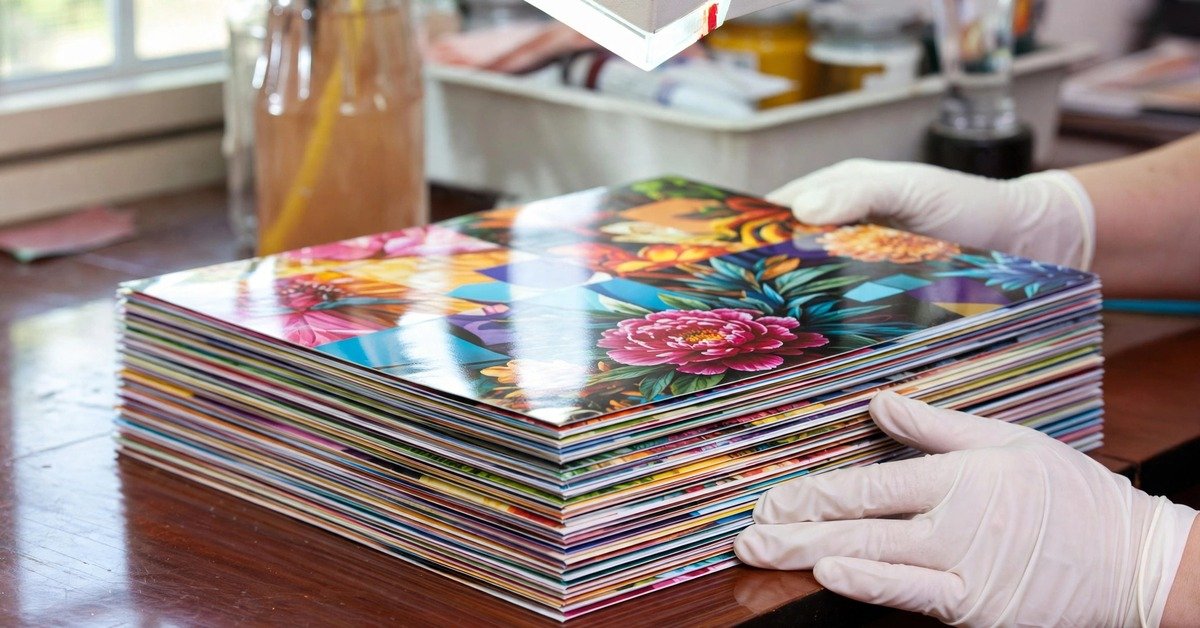
Gloss UV coating creates a shiny, reflective surface. It is frequently selected for premium packaging, promotional materials, product labels, brochures, and business cards.
The reflective finish can make colors appear more vivid and help important design elements stand out. However, highly reflective surfaces may also reveal fingerprints, scratches, or handling marks more readily.
Matte UV Coating
Matte UV coating produces a finish with less reflection. It is often used for sophisticated packaging, book covers, corporate publications, and products that benefit from a restrained visual style.
Matte finishes can provide an effective background for contrasting glossy elements. Their resistance to fingerprints and abrasion varies by formulation.
Satin UV Coating
Satin finishes sit between glossy and matte appearances. They offer a moderate level of reflection and can be useful when a product requires visual depth without a highly reflective surface.
The precise appearance depends on the coating’s formulation and the surface to which it is applied.
Spot UV Coating
Spot UV applies the coating only to selected portions of a design. For example, a package might have a matte background with a glossy company logo, or a book cover might use UV coating to highlight a title.
This technique creates contrast through differences in reflection and surface texture. It is especially popular for premium printed materials because it draws attention to specific design elements without coating the entire surface.
Textured and Specialty Finishes
Some specialized UV-curable products create raised, tactile, or patterned effects. These can be used for decorative packaging, labels, and selected product surfaces.
Not every UV coating supports these effects. The desired texture must be compatible with the application equipment, coating formulation, and curing system.
Where Is Uvlack Used?
Printing and Publishing
Printing is one of the clearest applications associated with Uvlack. UV varnish can be applied to brochures, magazines, catalogs, book covers, business cards, postcards, and promotional materials.
It can improve visual appeal while providing an additional layer of protection against ordinary handling. Spot UV is particularly useful for emphasizing titles, photographs, logos, and other important design elements.
Packaging and Product Labels
Packaging manufacturers use UV coatings to improve the appearance and handling performance of suitable paperboard cartons, labels, and other printed materials.
Cosmetics, electronics, consumer goods, and luxury products may use gloss, matte, or spot finishes to reinforce their visual identity. The coating must be selected for the package’s actual purpose, particularly when it may come into contact with food or other sensitive contents.
A UV coating should not automatically be assumed suitable for direct food contact. Regulatory requirements, migration testing, and manufacturer specifications must be considered where relevant.
Furniture and Wood Finishing
UV-curable finishes can be applied to suitable wood products, furniture panels, flooring components, and decorative surfaces.
Their rapid curing can support efficient manufacturing and consistent surface quality. Depending on the formulation, the finish may provide useful resistance to scratches, stains, and everyday wear.
Wood finishing requires particular attention to surface preparation, coating compatibility, and the ability of UV light to reach the areas that need curing.
Plastic and Manufactured Components
Certain plastic components can receive UV-curable coatings to improve appearance or surface performance. Applications may include decorative panels, product housings, and selected industrial components.
Adhesion is a major consideration because different plastics have different surface energies and chemical properties. Some materials require pretreatment or a specialized coating formulation.
Industrial Product Finishing
UV-curable coatings are also used in selected manufacturing processes where rapid production, controlled film formation, and particular surface properties are important.
The suitability of the technology depends on the component’s geometry, operating environment, exposure conditions, and performance requirements. Complex shapes and recessed areas can be difficult to cure if the UV light cannot reach the coating effectively.
Benefits of Uvlack
The practical advantages of UV-curable lacquer extend beyond its appearance.
- Faster production: Rapid curing can reduce waiting time between coating and subsequent processing.
- Improved handling: A properly cured coating can help protect a surface against everyday scuffs and abrasion.
- Customizable design: Gloss, matte, satin, and spot effects provide flexibility for product presentation.
- Potential emissions benefits: Many UV-curable formulations contain high levels of reactive solids and can emit fewer volatile organic compounds (VOCs) than conventional solvent-based alternatives.
- Efficient space utilization: Some production lines can reduce the need for large conventional drying ovens.
- Repeatable results: Controlled application and curing can support consistent quality across production runs.
These benefits are not guaranteed in every situation. The actual result depends on the formulation, curing equipment, application process, and comparison material. UV curing can also involve energy consumption, equipment maintenance, and additional investment.
Limitations and Challenges of Uvlack
Initial Equipment Costs
Industrial UV coating requires compatible application equipment and a suitable curing system. Installing or upgrading production machinery can involve significant upfront expenditure.
For smaller businesses, the investment must be evaluated against production volume, labor savings, finishing requirements, and the expected reduction in processing time.
Material Compatibility
Not every surface accepts UV lacquer equally well. Some plastics require pretreatment, while porous materials may absorb coatings unevenly. Certain inks, adhesives, and underlying finishes may also be incompatible with a particular formulation.
Testing is essential before committing to full-scale production.
Incomplete Curing
Insufficient UV energy, incorrect wavelength, excessive coating thickness, or unsuitable production speeds can lead to incomplete curing.
Potential consequences include reduced durability, poor adhesion, residual reactive substances, or an unsatisfactory finish. Correct equipment settings and quality-control procedures are therefore essential.
Surface and Design Limitations
Highly detailed designs, deep recesses, irregular shapes, and shadowed areas can complicate coating application or UV exposure.
Spot UV also requires accurate registration with the printed artwork. Misalignment can reduce the quality of the finished design and increase production waste.
Safety Requirements
UV curing equipment can expose workers to hazardous ultraviolet radiation if it is not properly shielded. Some uncured coating ingredients may irritate the skin or eyes or cause sensitization.
Industrial operations should use suitable shielding, interlocks, ventilation where required, personal protective equipment, and the handling procedures specified in the product’s safety documentation. UV lamps and associated equipment must be maintained according to manufacturer instructions.
Uvlack and Environmental Considerations
UV-curable coatings can offer environmental advantages when compared with certain conventional solvent-based systems. Many formulations are designed to reduce solvent evaporation and associated VOC emissions because much of the reactive material becomes part of the cured film.
However, it is inaccurate to claim that every UV coating is completely emission-free or automatically environmentally friendly. Some formulations can release small amounts of volatile substances during curing, and the overall environmental impact depends on the ingredients, equipment, energy source, waste management, and production process.
Other considerations include the energy required to operate curing lamps, the handling of uncured chemicals, and the disposal or recycling of coated materials. Manufacturers seeking a lower-impact finishing process should evaluate verified product data, emissions information, applicable environmental requirements, and the complete production system rather than relying on the UV label alone.
Uvlack Compared With Traditional Varnish
The main difference between UV lacquer and conventional varnish lies in how the finish becomes solid. Traditional varnishes may dry through solvent or water evaporation, oxidation, or other chemical processes, depending on their formulation. UV-curable lacquer uses ultraviolet energy to initiate a rapid chemical curing reaction.
UV coatings often offer shorter processing times and can provide strong surface performance. Conventional varnishes, however, may be more suitable for certain substrates, applications, production setups, or budgets.
Factor | UV-Curable Lacquer | Conventional Varnish
Curing method | UV-activated chemical reaction | Depends on formulation; may involve evaporation or chemical drying
Processing time | Often very short after UV exposure | Can require longer drying or curing periods
Equipment | Requires suitable UV curing equipment | May use conventional drying arrangements
Surface properties | Can provide hard, durable finishes | Varies widely by product
Environmental profile | Often low in VOC emissions, but formulation-dependent | Varies by waterborne, solvent-based, or other chemistry
Best choice | High-speed production and compatible applications | Applications where conventional curing, cost, or material compatibility is preferable
The right choice depends on the requirements of the finished product rather than on curing speed alone.
History and Development of UV Coating Technology
UV-curable coatings developed as part of the broader growth of radiation-curing technology in industrial manufacturing. The underlying principle is that light can initiate a chemical reaction that converts a liquid coating into a solid film.
Over time, improvements in coating chemistry, photoinitiators, application equipment, and UV light sources expanded the range of practical uses. Printing and surface-finishing operations adopted the technology because rapid curing can support higher throughput and reduce reliance on extended drying stages.
The technology has since been adapted to different industrial requirements, including printed packaging, decorative surfaces, furniture components, and selected manufactured products. It is important to distinguish this established technological history from the spelling Uvlack. UV-curable coatings are not a newly invented process simply because the exact keyword appears in newer online articles. The word’s use varies, and there is insufficient evidence to assign one universal invention date or a single inventor to Uvlack itself.
Latest Developments and Current Trends
As of October 2026, the most useful way to understand developments related to Uvlack is to examine the wider UV-curable coating industry rather than assume that every article using the keyword describes a separate innovation.
Growth of UV LED Curing
UV LED systems have become an important option for suitable curing applications. Depending on the equipment and process, they can offer longer operating life, lower heat output, and more targeted energy delivery than some conventional UV lamp systems.
However, an LED system must match the coating’s photoinitiators and required curing wavelength. Switching light sources does not automatically guarantee equivalent curing performance.
Greater Focus on Resource Efficiency
Manufacturers continue to assess coating systems for energy consumption, emissions, waste reduction, and production efficiency.
UV curing can support these goals, but the benefits depend on the complete process. Formulation improvements, efficient curing equipment, correct application thickness, and reduced production waste all influence the outcome.
More Sophisticated Printed Finishes
Packaging and commercial printing increasingly use combinations of surface effects to create visual differentiation. Spot UV, contrasting gloss and matte finishes, and selected tactile effects allow designers to emphasize key elements while maintaining a consistent overall appearance.
The value of these effects depends on design quality, application precision, and the intended audience.
Greater Attention to Compliance and Safety
As UV-curable products are used across different applications, manufacturers must carefully consider chemical handling, worker exposure, product compatibility, and end-use requirements.
Food packaging, medical applications, and products intended for sensitive environments may require specific testing or regulatory assessment. A general-purpose UV lacquer should never be presumed suitable for every application.
Clarifying the Meaning of Uvlack Online
The keyword has appeared in online articles with different explanations, including descriptions of coatings, brands, and unrelated digital concepts. These descriptions should not be treated as equally established.
The coating-related interpretation has a clear technical basis in UV-Lack and UV-curable varnish terminology. Claims that Uvlack is a particular software platform, universal industrial product, or revolutionary standalone invention require independent evidence before they can be accepted.
For readers researching a specific product, the most reliable approach is to examine its manufacturer, technical specifications, intended use, and safety documentation.
How to Choose the Right Uvlack Coating
Selecting a suitable UV lacquer requires more than choosing between glossy and matte finishes.
First, identify the substrate and confirm that the coating is compatible with it. Next, determine the required appearance, expected durability, operating environment, and level of protection.
Consider whether the application requires full-surface coverage or a selective spot effect. Review the recommended application method, curing wavelength, light intensity, production speed, and coating thickness.
For commercial or industrial use, request the technical data sheet and safety data sheet. These documents help establish the product’s intended applications, processing requirements, handling precautions, and relevant performance information.
Where appearance or durability is critical, test the coating under realistic production and use conditions before adopting it for large-scale manufacturing.
Frequently Asked Questions About Uvlack
Is Uvlack a real technology?
Uvlack is a term associated with UV-curable lacquer and coating technology. UV curing itself is an established industrial process. The exact spelling Uvlack is less standardized, so the context should be checked before assuming that it refers to a specific product.
Is Uvlack the same as UV lacquer?
In many printing and surface-finishing contexts, Uvlack is used to refer to UV lacquer, UV varnish, or UV coating. The more established technical expressions are generally UV-Lack and UV-curable coating.
How long does Uvlack take to cure?
Curing can take less than a second in suitable industrial conditions, but there is no universal curing time. The formulation, coating thickness, UV source, light intensity, wavelength, and production speed all affect the result.
Is Uvlack waterproof?
Some UV-curable coatings provide moisture resistance, but that does not make every finished product waterproof. The level of protection depends on the coating formulation, coverage, adhesion, substrate, and exposure conditions.
Is Uvlack environmentally friendly?
UV-curable coatings can reduce VOC emissions compared with certain conventional solvent-based coatings. Nevertheless, their environmental performance varies by formulation and production system. They should not automatically be described as emission-free or harmless.
Can Uvlack be used on wood and plastic?
Some UV-curable coatings are formulated for wood and certain plastics. Compatibility depends on the specific material, surface preparation, adhesion requirements, and curing conditions.
Is Uvlack a brand name?
The term may be used as a brand-style name in some contexts, but the word alone does not establish the existence of one particular manufacturer or universal product. Specific branding claims should be verified independently.
Conclusion
Uvlack is most usefully understood as a term associated with UV lacquer, UV varnish, and UV-curable coating technology. Its main purpose is to create a finished surface that combines an attractive appearance with practical performance benefits.
The underlying technology works by using ultraviolet light to initiate a chemical reaction that hardens a specially formulated coating. This process can support rapid manufacturing, consistent finishes, and a range of visual effects across printing, packaging, furniture, and selected industrial applications.
At the same time, UV-curable coatings require appropriate equipment, compatible materials, proper curing conditions, and suitable safety precautions. Their durability, environmental performance, and suitability for particular uses depend on the individual formulation and production process.
The key distinction is between the established science of UV curing and the less standardized online use of the word Uvlack. Understanding that distinction helps readers evaluate claims accurately, choose appropriate finishing methods, and avoid confusing a general coating term with an unverified product or digital platform.