
Introduction
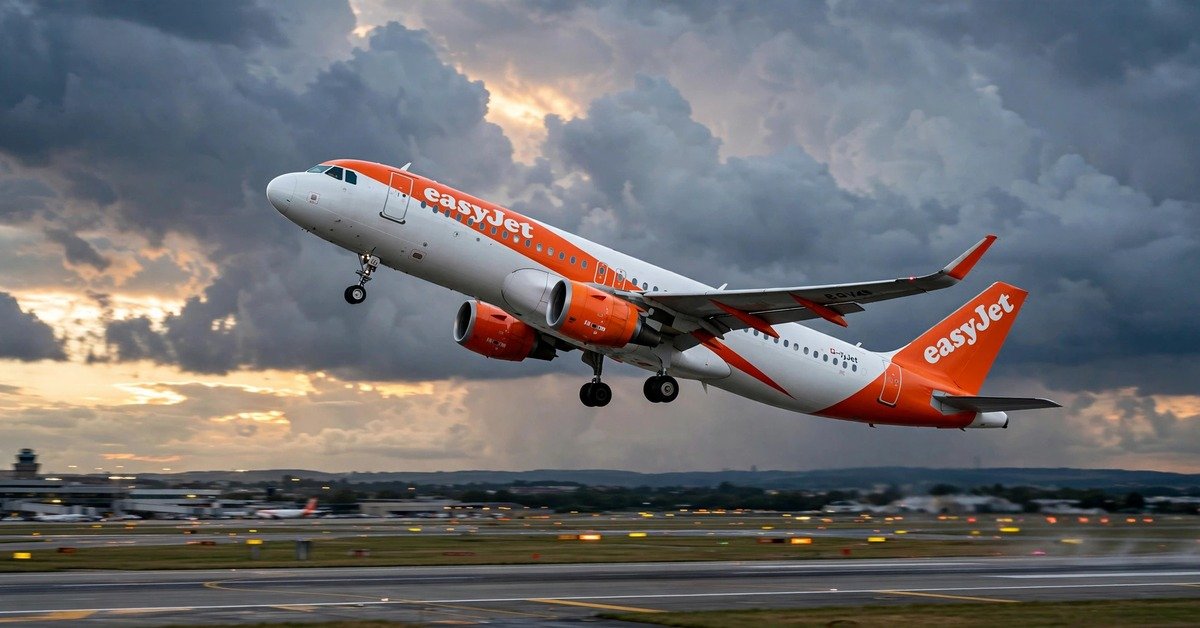
The easyJet flight U2238 emergency landing Newcastle story concerns an unexpected diversion involving an easyJet passenger flight travelling from Copenhagen, Denmark, to Manchester, United Kingdom, on 27 October 2025. The aircraft diverted to Newcastle International Airport after a passenger required urgent medical attention. It landed safely, medical personnel attended to the situation, and the aircraft subsequently continued towards Manchester.
Although the incident attracted attention because the crew declared an emergency, the available information does not indicate that the aircraft suffered a major mechanical failure or that a crash occurred. Instead, the diversion demonstrated how airline crews respond when a passenger needs urgent assistance during a flight.
An important detail is the flight number. The incident is more accurately associated with U22238, also identified as EZY2238, rather than U2238. This distinction matters because U2238 is a separate easyJet flight designation associated with the Newcastle-to-Bristol route. Understanding this difference helps readers identify the correct incident and avoid confusion caused by similar flight numbers.
Quick Information Table
| Detail | Information |
| Airline | easyJet |
| Incident date | 27 October 2025 |
| Flight involved | U22238 / EZY2238 |
| Common search term | EasyJet flight U2238 emergency landing Newcastle |
| Original departure airport | Copenhagen Airport, Denmark |
| Planned destination | Manchester Airport, United Kingdom |
| Diversion airport | Newcastle International Airport |
| Aircraft type | Airbus A320 |
| Reported aircraft registration | G-EZPB |
| Reason for diversion | Passenger welfare and urgent medical assistance |
| Emergency transponder code | 7700 |
| Reported landing time | Approximately 22:52 GMT |
| Landing outcome | Safe landing |
| Final journey | The aircraft subsequently continued to Manchester |
| Confirmed aircraft damage | No major damage reported in the available accounts |
What Happened to EasyJet Flight U2238?
On the evening of 27 October 2025, an easyJet aircraft was operating a scheduled service from Copenhagen to Manchester. The flight was expected to cross the North Sea before arriving in northern England.
During the journey, a passenger welfare issue developed onboard. The situation required urgent medical attention, prompting the crew to change the aircraft’s planned route rather than continue directly to Manchester.
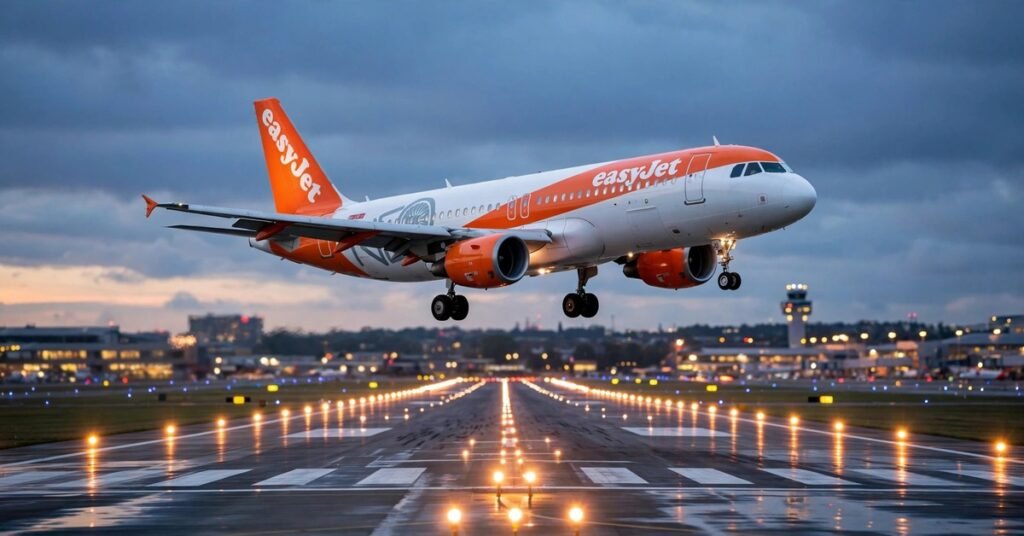
The aircraft diverted to Newcastle International Airport, where medical personnel could meet the flight and assist the passenger. The landing took place at approximately 22:52 GMT, according to published accounts of the incident.
The diversion was an unexpected interruption to the scheduled journey, but the aircraft landed safely. Following the stop in Newcastle and the response to the medical situation, the flight continued towards Manchester.
The central facts are therefore straightforward: a passenger required urgent assistance, the crew diverted the aircraft, Newcastle received the flight, and the journey subsequently resumed.
Why Did the Aircraft Divert to Newcastle?
The reported reason was a passenger welfare issue requiring urgent medical attention. In commercial aviation, a medical emergency can justify changing the destination even when the aircraft itself is operating normally.
A passenger’s condition can deteriorate during a flight, and cabin crew may not have the resources needed to provide every level of medical treatment. When the situation warrants it, the flight crew can decide that landing earlier is the safest course of action.
The decision involves balancing the urgency of the situation against the available airports and operational conditions. Once a diversion becomes necessary, the crew coordinates with air traffic control to arrange a suitable landing.
In this incident, Newcastle provided the landing point for the aircraft travelling between Copenhagen and Manchester. The available reports do not establish every factor considered by the pilots, so it would be inappropriate to claim that a particular runway, weather condition or distance was the sole reason Newcastle was selected.
The Original Route and Flight Details
The flight’s planned route connected Copenhagen Airport with Manchester Airport. These airports serve passengers travelling for business, holidays, family visits and other purposes between Denmark and the United Kingdom.
The aircraft was reported as an Airbus A320 registered G-EZPB. The A320 is a widely used narrow-body passenger aircraft designed for short- and medium-haul routes.
Nothing about the aircraft type alone indicates a problem. The reported reason for the Newcastle diversion was a passenger welfare issue, not a confirmed aircraft malfunction.
How the Planned Journey Changed
Under normal circumstances, the aircraft would have continued from Copenhagen to Manchester without stopping elsewhere.
The unexpected situation changed the route to:
Departure: Copenhagen Airport.
Diversion: Newcastle International Airport.
Final destination: Manchester Airport.
The additional landing interrupted the planned schedule and affected the timing of the journey. However, it also allowed medical personnel to attend to the passenger without waiting for the aircraft to reach its original destination.
This distinction is important when interpreting flight-tracking information. An aircraft changing course does not automatically mean that it has experienced a technical failure. Medical situations, weather conditions and other operational circumstances can also require diversions.
What Does an Emergency Declaration Mean?
The phrase “emergency landing” often creates concern because it can suggest that an aircraft has lost control or suffered a serious technical problem. In reality, an emergency declaration can cover several different situations.
In this case, reports indicated that the flight transmitted Squawk 7700, the internationally recognised transponder code for a general emergency.
The code alerts air traffic control that an aircraft needs urgent assistance and priority handling. Controllers can then coordinate with the flight crew, manage surrounding traffic and help the aircraft reach an appropriate airport.
Squawk 7700 does not identify the exact nature of the emergency. It can be used in different circumstances, including medical emergencies and technical problems. Consequently, the code should not be treated as proof of engine failure, fire or structural damage.
For the easyJet Newcastle diversion, the reported passenger welfare issue provides the relevant context for understanding the emergency declaration.
How Air Traffic Control Supports an Emergency Flight
When a crew declares an emergency, air traffic controllers can give the aircraft priority over routine traffic where required.
Depending on the circumstances, this may involve coordinating a suitable approach, providing instructions to the pilots and arranging for emergency personnel to be ready on the ground.
Other aircraft may also need to adjust their movements to accommodate the emergency flight. These measures are part of normal safety procedures and do not necessarily indicate that the arriving aircraft is about to crash.
The objective is to help the crew land safely and obtain the assistance needed to resolve the emergency.
What Happened After the Aircraft Landed?
The aircraft landed safely at Newcastle International Airport, where medical personnel attended to the passenger who required assistance.
The unexpected stop interrupted the flight’s original schedule, but the aircraft did not remain permanently diverted. After the situation had been handled, the flight subsequently continued to Manchester.
This outcome is an important part of the incident. The aircraft reached the ground safely, and the passenger could receive attention from medical professionals.
However, publicly available accounts do not establish the passenger’s diagnosis, the precise severity of the medical condition or the person’s subsequent recovery. These details should not be assumed or presented as confirmed facts.
Likewise, the fact that the aircraft continued its journey does not, by itself, prove that every possible technical issue was investigated or ruled out. The available information simply does not identify a major aircraft fault as the cause of the diversion.
Did the Diversion Affect Other Flights?
An emergency landing can temporarily affect airport operations because air traffic controllers must coordinate the arriving aircraft with other scheduled movements.
Contemporary reporting on this incident indicated that an Air France flight was temporarily held in a holding pattern while the easyJet aircraft landed and the runway was cleared.
Such adjustments are part of air traffic management. They allow controllers to prioritise an urgent arrival while maintaining separation between aircraft and managing the wider traffic situation.
The extent of any knock-on delays for other passengers is not fully established in the available information. It is therefore better to distinguish the reported temporary holding of another aircraft from any broader claims about disruption across the airport.
Was There an Aircraft Mechanical Problem?
One of the main questions surrounding the easyJet flight U2238 emergency landing Newcastle incident is whether the aircraft experienced a technical fault.
The available accounts identify a passenger welfare issue as the reason for the diversion. They do not establish engine failure, an onboard fire, structural damage or another major aircraft malfunction as the cause.
A declared emergency should not automatically be interpreted as evidence that an aircraft has become mechanically unsafe. Pilots may declare an emergency when circumstances require immediate priority, even when the aircraft remains capable of normal flight.
The safest interpretation is to separate confirmed information from speculation.
- Reported cause: A passenger required urgent medical attention.
- Emergency response: The crew diverted to Newcastle and landed safely.
- Aircraft outcome: The flight subsequently continued to Manchester.
- Mechanical failure: No major fault is established by the available accounts.
- Passenger outcome: The passenger received medical attention, but further personal medical details have not been reliably confirmed.
These distinctions help prevent an ordinary description of an emergency response from turning into an unsupported account of an aircraft malfunction.
How Airlines Respond to In-Flight Medical Emergencies
Medical situations are among the reasons an airline may need to change a flight’s destination unexpectedly. Airlines prepare cabin crew to recognise medical concerns, provide initial assistance and communicate relevant information to the flight deck.
When a passenger becomes unwell, the crew can assess the situation within the limits of their training and available equipment. They may also ask whether a qualified medical professional is travelling onboard and willing to assist.
Depending on the circumstances, ground-based medical advisers may help the crew assess the urgency of the situation. The captain then considers the information available and decides whether continuing to the original destination remains appropriate.
If urgent treatment is needed, a diversion can reduce the time before professional medical care becomes available.
Why a Diversion Can Be the Safest Decision
Continuing to the scheduled destination may be reasonable for some medical situations, while others require an earlier landing. The decision depends on the passenger’s condition and the circumstances of the flight.
A diversion can involve extra fuel planning, changes to air traffic arrangements and delays for everyone onboard. Nevertheless, those operational considerations are secondary to responding appropriately when a passenger may need urgent treatment.
The Newcastle incident illustrates this principle. The flight did not continue directly to Manchester once the medical situation required a different response. Instead, the aircraft diverted, landed safely and allowed medical personnel to attend to the passenger.
Why Is There Confusion About the Flight Number?
The flight number is one of the most important details in the story because similar-looking identifiers have appeared in online coverage.
The emergency flight was reported as U22238, with EZY2238 used as its corresponding operational identifier. The commonly searched term U2238 is different.
EasyJet uses the airline designator U2. When it is combined with flight number 2238, the resulting commercial identifier is U22238. The airline’s three-letter operational designator produces EZY2238.
By contrast, U2238 corresponds to U2 flight 238, a separate flight designation associated with a Newcastle-to-Bristol service.
This small difference creates a substantial risk of confusion. Readers searching for an emergency landing may encounter articles that use U2238 as shorthand for the Copenhagen-to-Manchester incident, even though the fuller flight identification is different.
Which Flight Number Should Be Used?
For accurate reporting, the Copenhagen-to-Manchester emergency diversion should be described as easyJet flight U22238 or EZY2238.
The phrase “easyJet flight U2238 emergency landing Newcastle” can still be used naturally when addressing the search term. However, the article should explain the discrepancy rather than repeat the incorrect flight number as an established fact.
Accurate identification matters because it helps readers distinguish the October 2025 incident from other flights operating under similar numbers. It also makes it easier to compare route information, aircraft details and published accounts without confusing separate services.
Latest Available Information About the Incident
The key reported facts remain centred on the event of 27 October 2025: the flight was travelling from Copenhagen to Manchester, diverted to Newcastle because a passenger needed urgent medical assistance, landed safely and subsequently continued to Manchester.
The available information does not establish a later major aircraft incident arising from this diversion or a confirmed mechanical failure associated with the event.
There is also no reliable basis for publishing a specific medical diagnosis or claiming a particular long-term outcome for the passenger.
Readers should be cautious about dramatic headlines that describe the event as a near-crash or suggest that the aircraft suffered catastrophic damage. Those claims are not supported by the reported facts summarised here.
The most useful update is the clarification of the flight number itself. U22238/EZY2238 is the more accurate identification of the Copenhagen-to-Manchester service involved in the Newcastle diversion, while U2238 refers to a different service.
What This Incident Shows About Aviation Safety
Unexpected diversions can be unsettling for passengers, but they are also an established part of commercial aviation safety procedures.
Flight crews are trained to respond to changing conditions, communicate with air traffic control and select an appropriate course of action when continuing the original journey is no longer the best option.
Airport personnel and emergency medical services also play a role in the response. Their coordination helps ensure that an aircraft can land safely and that the people who need assistance can receive it as quickly as possible.
In this case, the aircraft’s safe landing and subsequent continuation to Manchester are consistent with an emergency diversion that was resolved without a reported aircraft accident.
That does not mean every operational detail is publicly known. Rather, it means that conclusions should be limited to what the available information supports.
The incident is a useful reminder that aviation safety involves responding to passenger emergencies as well as managing the aircraft itself. A successful response is not measured only by whether a plane reaches its scheduled destination on time, but also by whether the crew makes appropriate decisions when circumstances change.
Frequently Asked Questions
Did easyJet flight U2238 make an emergency landing in Newcastle?
The incident commonly described using this search phrase involved easyJet flight U22238, also identified as EZY2238. The Copenhagen-to-Manchester flight diverted to Newcastle on 27 October 2025 after a passenger required urgent medical attention.
Why did the flight divert?
The reported reason was a passenger welfare issue requiring urgent medical assistance. The crew diverted so the passenger could receive care after landing.
Did the plane land safely?
Yes. The aircraft landed safely at Newcastle International Airport, and medical personnel attended to the passenger.
What aircraft was involved?
The aircraft was reported as an Airbus A320 registered G-EZPB.
What does Squawk 7700 mean?
Squawk 7700 is the transponder code used to alert air traffic control to a general emergency. It does not, on its own, reveal whether the emergency involves a passenger, the aircraft or another situation.
Did the flight eventually reach Manchester?
Yes. Following the Newcastle diversion and the response to the medical situation, the aircraft subsequently continued to Manchester.
Was there an engine failure?
The available accounts do not establish an engine failure or another major aircraft malfunction as the cause. The reported reason was a passenger welfare issue.
What happened to the passenger?
The passenger received medical attention after the aircraft landed. Further details about the person’s condition or recovery have not been reliably established in the available information.
Is U2238 the correct flight number?
Not for the October 2025 Copenhagen-to-Manchester diversion. The incident is more accurately associated with U22238/EZY2238. U2238 is a separate easyJet flight designation associated with the Newcastle-to-Bristol route.
Conclusion
The easyJet flight U2238 emergency landing Newcastle story describes a passenger-related emergency that led an easyJet flight travelling from Copenhagen to Manchester to divert to Newcastle International Airport on 27 October 2025.
The crew responded by changing the flight’s route, the aircraft landed safely, and medical personnel attended to the passenger. The aircraft subsequently continued towards Manchester. Available reports do not establish a major mechanical failure or an aircraft accident as the cause of the diversion.
The most important clarification concerns the flight number: U22238/EZY2238 is the more accurate identification of the flight involved, while U2238 refers to a separate service. Keeping that distinction clear helps readers understand the incident without confusing it with another flight.
Ultimately, the event demonstrates why airline crews must be prepared to respond to unexpected medical situations and why a diversion can be a necessary safety decision rather than evidence of an aircraft malfunction.