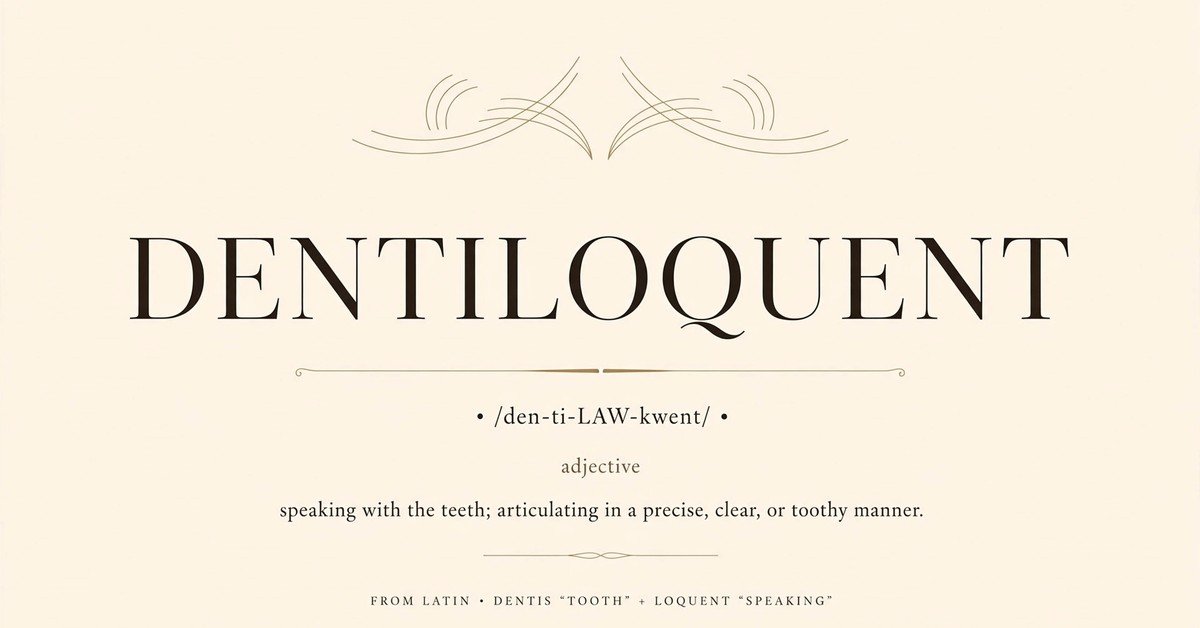
Some words describe the world around us, and some describe the strange, quiet habits of the human body itself. Dentiloquent belongs to the second group. It is a rare, precise, and oddly elegant adjective that describes the act of speaking through the teeth. You have almost certainly witnessed it: a person so angry, focused, or determined that the jaw tightens, the teeth press together, and words squeeze out through a barely opened mouth. Dentiloquent gives that moment a name.
Unlike everyday vocabulary, dentiloquent is not a word most people use in conversation. It lives at the edges of dictionaries, in word lists for language lovers, and in the descriptions of writers who need a single term for a very specific manner of speaking. Yet the behavior it names is universal. Every culture recognizes the tight-jawed reply and the warning delivered through clenched teeth. This article explores what dentiloquent means, where it comes from, and why such an uncommon word still deserves attention.
Quick Information
| Detail | Information |
|---|---|
| Word | Dentiloquent |
| Pronunciation | den-TIL-oh-kwent |
| Part of speech | Adjective |
| Core meaning | Speaking through the teeth |
| Origin | Latin: dens/dentis (tooth) + loqui (to speak) |
| Related noun | Dentiloquy (the habit of speaking through the teeth) |
| Related term | Dentiloquist (one who speaks through the teeth) |
| Dictionary status | Rare; listed as a monitored new-word suggestion in some references |
| Usage | Mostly literary and descriptive |
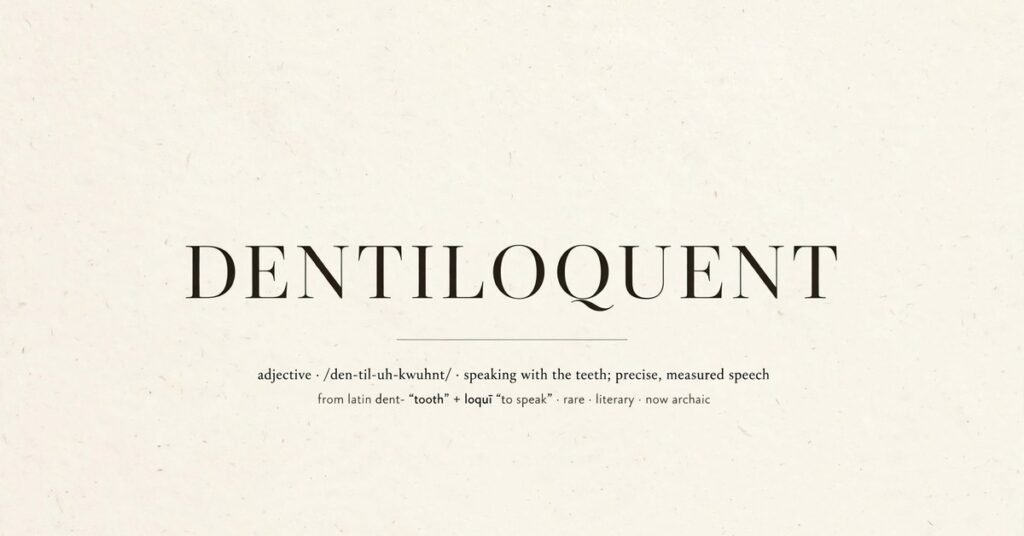
What Does Dentiloquent Mean?
The clearest definition of dentiloquent is simple: speaking through the teeth. It describes speech produced while the teeth are held together or nearly closed, so words emerge from a mouth that barely opens. The resulting sound is often tight and controlled, because the normal free movement of the jaw and lips is restricted.
It helps to be clear about what the word does not mean. Dentiloquent does not mean whispering, mumbling, stuttering, or speaking incorrectly. It refers specifically to the physical manner of speech, not its volume or correctness. A person can speak dentiloquently in a normal tone, loud enough for everyone to hear, while keeping the teeth firmly together.
In practical use, a phrase like “a dentiloquent reply” suggests the speaker answered with a tightened jaw. The image is immediate: controlled emotion, suppressed anger, or fierce concentration. That is why the word is so useful in descriptive writing. One adjective replaces a whole sentence about clenched jaws and strained speech.
The Latin Roots
Like many precise English words, dentiloquent is built from Latin parts. The first comes from dens, or dentis in its stem form, meaning tooth. This root appears in familiar words like dental, dentist, and denture. The second comes from loqui, the Latin verb meaning to speak, which also gives us loquacious, eloquent, and ventriloquist.
Combined, the literal sense is “speaking through the teeth.” The structure follows a pattern seen across English: magniloquent means speaking grandly, somniloquent means talking in one’s sleep, and melliloquent means speaking sweetly. Dentiloquent belongs to the same family, but instead of describing style or content, it describes the physical position of the mouth.
Dentiloquent, Dentiloquy, and Dentiloquist
Dentiloquy
Dentiloquy is the noun form and has the most established dictionary history of the group. Older references define it as the habit or practice of speaking through the teeth or with the teeth closed. Where dentiloquent describes a moment or manner, dentiloquy names the ongoing practice itself.
Dentiloquist
A dentiloquist is a person who speaks through the teeth. The ending mirrors ventriloquist, literally one who speaks from the stomach. A ventriloquist throws the voice; a dentiloquist squeezes speech through nearly closed teeth. The term is extremely rare but completes the word family logically.
Why Is the Word So Uncommon?
If the behavior is so familiar, why is the word so rare? In everyday speech, people reach for phrases rather than single rare words. “Speaking through clenched teeth” is instantly understood, while dentiloquent needs explanation for most readers.
Dictionary treatment reflects this. Some modern references list dentiloquent among submitted new words, noting that usage evidence is still being monitored rather than presenting it as a fully established entry. This is common for precise but infrequent vocabulary: the meaning is clear, but the word has not crossed the threshold of common use.
There is also a cultural factor. Modern English favors plain description over ornate Latinate vocabulary in most contexts. A journalist will write “through gritted teeth” rather than “dentiloquently.” The rare word survives mainly among writers, language enthusiasts, and puzzle fans who enjoy unusual precision.
The Emotional Language of Speaking Through the Teeth
Although dentiloquent technically describes only the physical act, in practice it almost always carries emotional meaning, because the situations that produce it are emotionally charged.
Anger and Frustration
The most common association is barely controlled anger. When someone is furious but trying to stay composed, the jaw clenches almost automatically, and speech comes out strained and deliberate. A “dentiloquent warning” in a story instantly communicates both the physical image and the threat behind it.
Determination and Resolve
Not all dentiloquent speech is angry. Athletes before a contest or anyone bracing for a hard task may speak through set teeth as a sign of grim determination. Here the tightened jaw signals focus and willpower, with each word measured and firm.
Pain and Endurance
People in physical pain often speak through clenched teeth because the jaw tightens involuntarily. A patient answering questions or someone staying calm through an injury may produce dentiloquent speech without intending to.
Concentration
Intense focus can lock the jaw as well. A craftsperson guiding a delicate cut or a driver navigating a hazard may answer in short, tight bursts through barely parted teeth, revealing a mind fully occupied elsewhere.
Dentiloquent Speech in Stories and on Screen
Writers have long known that how something is said can reveal more than what is said. In novels, the classic formulation is familiar to every reader: a character speaks “through clenched teeth” or “through gritted teeth.” This is the plain-English version of dentiloquent, signaling that a character is holding something back, whether rage, fear, or grief.
On screen, actors convey it physically: a tightened jaw, minimal lip movement, words pushed between the teeth. Audiences may never hear the word dentiloquent, but they recognize the behavior instantly. It remains one of the most reliable visual signals of suppressed emotion in acting.
For writers who know the term, using it directly adds precision and style. “His dentiloquent reply left no doubt about his feelings” is more compact and striking than the longer plain version, rewarding readers who enjoy rich vocabulary while staying decipherable from context.
How to Use the Word Yourself
Dentiloquent is worth knowing but should be used with care. Because it is rare, it draws attention. Used sparingly, it adds color; overused, it distracts. It works best in narrative description rather than dialogue, since it belongs to a literary register. A narrator can describe a “dentiloquent whisper” to powerful effect.
Always give readers enough context to grasp the meaning. Because most will not know the word in advance, surround it with physical or emotional cues: “She gave a dentiloquent reply, each word forced between her clenched teeth.” The sentence teaches the word while using it.
Why Rare Words Still Matter
In an age of quick messages, it is fair to ask whether a word like dentiloquent has a future. Precision always matters. A language with a specific word for speaking through the teeth is richer than one without it, even if most speakers use the phrase instead.
Rare words also preserve observations about human behavior. Dentiloquent captures something real: the way emotion locks the jaw and reshapes speech. As long as people feel anger, determination, and fierce concentration, the behavior will exist, and naming it keeps the observation alive. Exploring the edges of the dictionary, where words like dentiloquent live, remains one of the quiet pleasures of language.
Frequently Asked Questions
How do you pronounce dentiloquent?
It is pronounced den-TIL-oh-kwent, with the stress on the second syllable.
Where does the word come from?
From Latin roots: dens/dentis meaning tooth, combined with loqui meaning to speak.
Is dentiloquent in the dictionary?
Its status is borderline. The related noun dentiloquy appears in older dictionaries, while the adjective is treated as a monitored new word by some modern references.
What is the difference between dentiloquent and dentiloquy?
Dentiloquy is the noun naming the habit of speaking through the teeth; dentiloquent is the adjective describing speech or a speaker in that manner.