To make the article accurate and useful for readers, it is important to distinguish verified information about Maplewood Grove from general observations about residential streets. Details such as its precise location, postcode, housing profile, local amenities, history and recent developments should be established before they are presented as facts.
Quick Information Table
The following profile focuses on Maplewood Grove in Stalybridge, Greater Manchester, postcode SK15 3GL. The same street name is used in other parts of England, so the location is important when interpreting property and neighbourhood information.
| Information | Details |
|---|---|
| Street name | Maplewood Grove |
| Town | Stalybridge |
| Metropolitan borough | Tameside |
| County/region | Greater Manchester, England |
| Postcode | SK15 3GL |
| Approximate coordinates | 53.4915° N, 2.0388° W |
| Street character | Small residential street |
| Approximate mapped length | 29 metres |
| Recorded property profile | Primarily houses |
| Common property types | Semi-detached and detached houses |
| Recorded construction period | Approximately 1999–2004 |
| Local authority | Tameside Metropolitan Borough Council |
| Nearby town centre | Stalybridge town centre |
| Wider regional setting | Greater Manchester and the foothills of the Pennines |
Introduction to Maplewood Grove
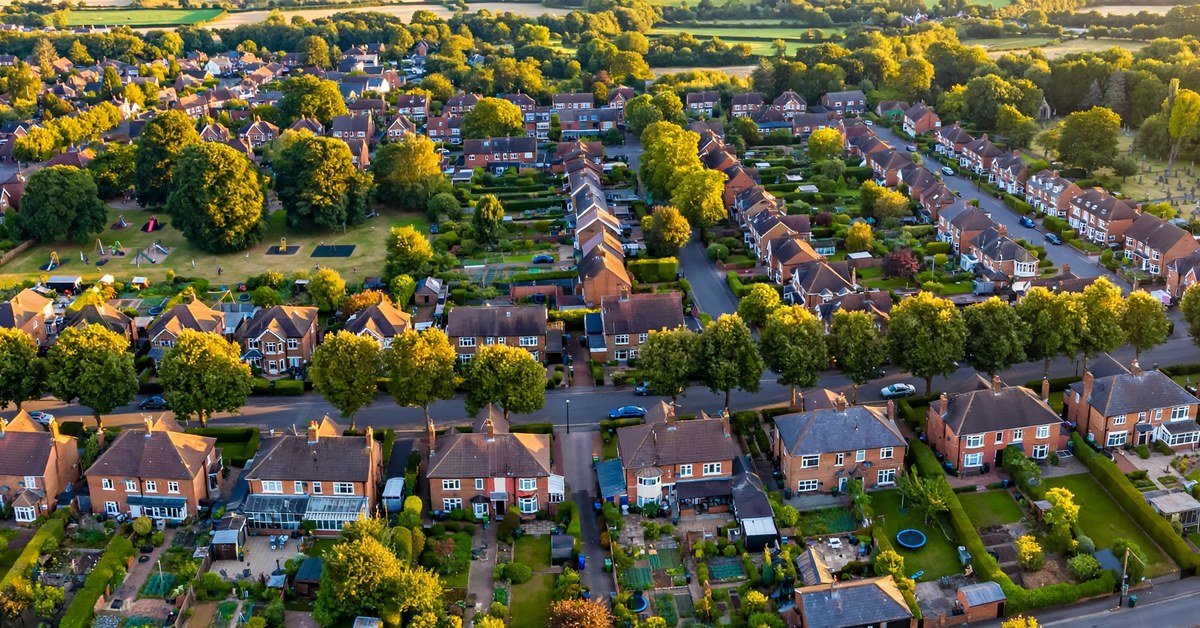
Maplewood Grove is a residential street in Stalybridge, Greater Manchester. Located within the SK15 postcode area, it forms part of a wider neighbourhood that combines modern housing with the established character and industrial heritage of the surrounding town.
The street is particularly relevant to people researching local property, comparing residential areas, exploring postcode information or learning more about the community in which a home is situated. Its small scale distinguishes it from larger residential roads, while its location in Stalybridge connects it to the area's shops, public services, transport links and recreational facilities.
Property records indicate that the homes associated with Maplewood Grove are predominantly residential, with semi-detached houses forming an important part of the housing mix. Available building-age information points towards development around the turn of the millennium, although individual properties may differ.
Understanding Maplewood Grove requires more than looking at its postcode alone. The surrounding neighbourhood, local history, property transactions, transport options and access to everyday services all contribute to a more complete picture of the area.
1. Location and Geographic Setting
Where is Maplewood Grove?
Maplewood Grove is situated in Stalybridge, a town within the metropolitan borough of Tameside in Greater Manchester, north-west England. Its postcode, SK15 3GL, identifies the immediate postal area and helps distinguish it from other streets with the same name.
Stalybridge lies east of Manchester, near the transition between Greater Manchester's urban landscape and the upland scenery of the Pennines. This position gives the wider town a distinctive geographical character, with established residential districts, commercial areas, transport infrastructure and access to countryside.
Maplewood Grove itself is a small residential road rather than a major through-route. Its limited recorded length suggests that it serves a compact group of properties. This scale can make street-specific information useful when investigating individual homes or comparing the immediate environment with larger surrounding roads.
The importance of the postcode
The postcode SK15 3GL is useful for several practical purposes:
• Identifying the correct street when arranging deliveries or visiting an address. • Researching nearby services, schools and public transport. • Comparing property sales in the immediate area. • Locating relevant council services and local authority information. • Distinguishing this Maplewood Grove from similarly named streets elsewhere in England.
A postcode should not, however, be treated as a complete description of a neighbourhood. Postcode boundaries do not necessarily match electoral wards, school catchment areas or the boundaries used in census statistics. Those details should be checked separately when they matter to a property purchase or relocation.
2. Housing and Property Characteristics
What types of homes are found on Maplewood Grove?
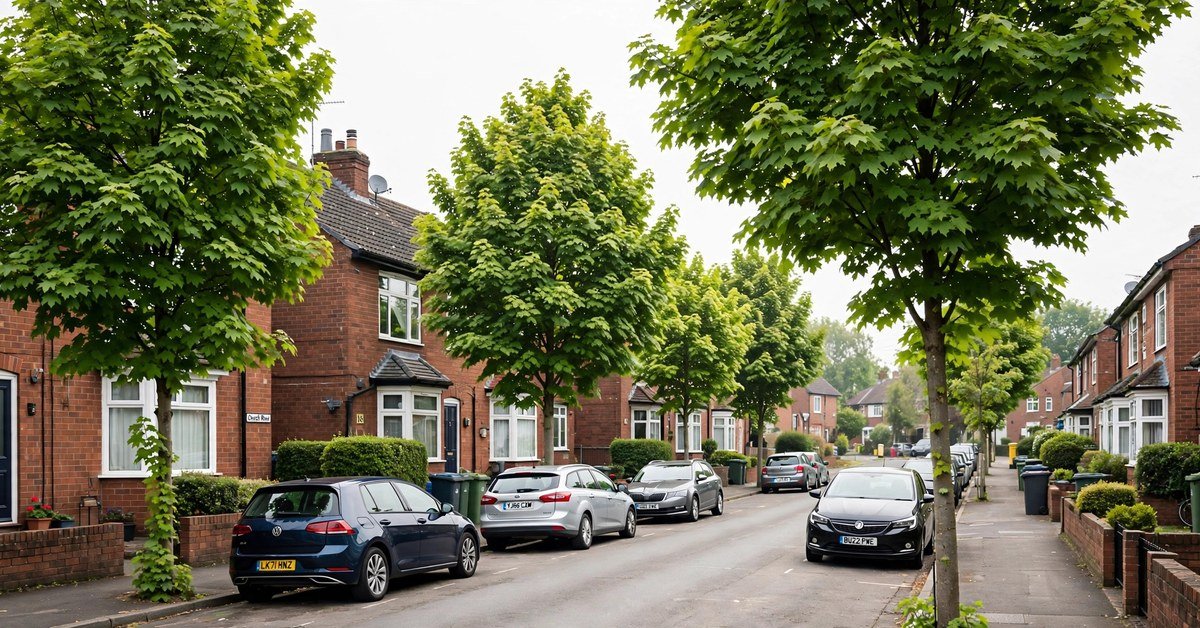
Available property records indicate that Maplewood Grove has a predominantly residential character, with semi-detached houses forming the main part of its recorded housing profile. Detached houses are also represented.
Semi-detached homes share a wall with an adjoining property, while detached houses stand separately from neighbouring buildings. Both types are common in British residential developments and can offer a different balance of indoor space, privacy, garden area and maintenance responsibilities.
The precise layout of each home will depend on its individual design. Potential buyers and tenants should therefore inspect property descriptions, floor plans, outdoor areas and parking arrangements rather than assume that all houses on the street share identical features.
When were the properties built?
Available street-level records place the construction dates of sampled homes broadly between 1999 and 2004, with 1999 appearing as the most common recorded year.
This suggests that Maplewood Grove belongs largely to a comparatively modern phase of residential development rather than an older Victorian or early industrial housing district.
Homes constructed around this period may have layouts and building features that differ from much older properties. Nevertheless, construction year alone cannot establish the condition of a building, the quality of its insulation or the extent of any later improvements. Extensions, replacement windows, heating upgrades and internal renovations can all affect the present condition of an individual home.
For a reliable assessment, prospective buyers should review the property's survey, building-control records where relevant, and any available energy performance certificate.
Owner-occupied and rented homes
The available street-level property profile indicates that owner-occupied homes account for most of the recorded tenure, with a smaller private-rental component.
Owner occupation means the property is occupied by its owner, although the precise arrangements can vary. Private rental properties are occupied under tenancy agreements with a landlord or letting agent.
A street containing both owner-occupied and rented homes can accommodate different household circumstances and housing needs. However, a small sample of properties cannot reliably establish the social composition of the entire neighbourhood or demonstrate whether residents have lived there for a long time.
Anyone considering a move should examine the individual property's tenure, lease or freehold status, service obligations and ongoing costs. These factors can be more significant to a household than the overall tenure pattern on a short street.
3. House Prices and Property Market Trends
Recorded property sales
Property transaction records provide a useful historical reference for Maplewood Grove. They can help prospective buyers understand previous sale prices and see how the local housing market has changed over time.
Reported transactions for the Stalybridge street include the following examples:
| Year | Recorded transaction information |
|---|---|
| 2020 | One reported sale at £252,000 |
| 2022 | Three reported sales, ranging from £278,000 to £305,000 |
| 2024 | Two reported sales, at £297,000 and £299,950 |
| 2025 | One reported sale at £357,144 |
These figures describe specific recorded transactions, not guaranteed market values for every property. The 2025 transaction is a useful recent reference point, but one sale cannot establish the average value of all homes on the street or prove that every property has increased in value at the same rate.
Differences in floor area, condition, improvements, plot size, parking, ownership arrangements and the timing of a sale can all affect the price achieved.
What do the figures mean for buyers?
The transaction history suggests that homes on Maplewood Grove have attracted substantial prices in recent years. It also illustrates why a property's individual characteristics matter when comparing transactions.
Buyers should consider several factors before deciding whether an asking price is reasonable:
• Recent completed sales of similar houses in the immediate neighbourhood. • The number of bedrooms and the property's internal floor area. • The condition of the roof, windows, heating system and other major components. • Energy efficiency and the likely cost of future improvements. • Garden space, parking and access to nearby facilities. • Mortgage rates, household affordability and wider market conditions.
Asking prices are not the same as completed sale prices. Similarly, automated property valuations are estimates rather than formal valuations or guarantees of what a buyer will pay.
Is Maplewood Grove a good property investment?
The street may be worth investigating for buyers interested in established residential neighbourhoods and relatively modern housing. However, a sound investment decision requires more than a record of rising prices.
Potential landlords should assess achievable rent, maintenance expenses, insurance, mortgage costs, taxation, periods without tenants and applicable legal responsibilities. Owner-occupiers should also consider how long they expect to live in the property and whether its size and location suit their future needs.
Street-level sales data is most useful as one part of a broader assessment, alongside a professional valuation and a comparison with similar properties across Stalybridge.
4. History and Development of the Surrounding Area
Stalybridge's industrial heritage
Although a detailed, street-specific historical account of Maplewood Grove is not established by the available information, the history of Stalybridge provides valuable context for understanding its surroundings.
Stalybridge developed from a relatively small settlement into an important industrial town during the Industrial Revolution. Its name is associated with the historic Manor of Stayley and a bridge crossing the River Tame. The river, nearby streams and the area's developing transport infrastructure helped shape the town's growth.
During the late eighteenth and nineteenth centuries, textile manufacturing became a major part of the local economy. Cotton mills, workshops and associated industries expanded, attracting workers and contributing to the growth of housing, shops and civic institutions.
As industrial activity increased, the town developed the infrastructure needed to support a growing population. Markets, schools, public buildings, transport services and recreational spaces became important features of everyday life.
From industrial town to modern residential community
Like many former textile towns in north-west England, Stalybridge changed considerably during the twentieth century. The decline of traditional manufacturing altered employment patterns and the use of former industrial buildings. Residential development and the adaptation of older commercial sites helped reshape parts of the town.
The recorded construction dates of homes on Maplewood Grove suggest that its present housing profile is associated with a much later period of residential development than Stalybridge's original industrial expansion.
However, the wider history of the town should not be confused with the history of the street itself. Without specific historical maps, planning documents or property records, it would be inaccurate to claim a particular year of establishment for Maplewood Grove or to attribute a specific historical event to the road.
For anyone interested in local history, historic mapping and planning records can help establish when the street first appeared, what occupied the land previously and how the surrounding neighbourhood developed.
5. Local Amenities and Everyday Convenience
Shops and essential services
Residents of Maplewood Grove can investigate the wider Stalybridge area for everyday shopping, healthcare, banking, food outlets and other essential services.
Stalybridge has an established town centre that serves surrounding residential neighbourhoods. The availability and convenience of individual amenities depend on the precise destination, opening hours and preferred mode of travel.
For people considering a move, it is sensible to identify the nearest supermarket, pharmacy, GP surgery, post office and other services they use regularly. The distance shown on a map may differ from the practical journey, particularly where roads, crossings or walking routes affect access.
Schools and education
Families researching Maplewood Grove should examine the schools serving the wider Stalybridge area. School availability, admission criteria and catchment arrangements can change, so proximity alone does not guarantee a place at a particular school.
Useful checks include:
• The distance between the property and the school entrance. • Available walking, cycling and public transport routes. • Admission arrangements and current school capacity. • Nursery, primary and secondary education options. • Special educational provision, where required.
Official school information is preferable to assumptions based solely on postcode-level summaries.
Parks and outdoor recreation
Stalybridge offers access to public green spaces and recreational facilities. One notable local destination is Stamford Park, a historic public park that opened in 1873 and subsequently developed to include additional attractions and landscaped areas.
The wider town also provides opportunities to explore its natural surroundings, including routes towards the Pennine landscape. These amenities can appeal to people who enjoy walking, spending time outdoors or visiting public parks.
The convenience of these places for a Maplewood Grove resident depends on the actual route and travel time. It is therefore better to check the distance to each destination than to assume that every local attraction is within easy walking distance.
6. Transport and Connectivity
Road connections
Stalybridge is connected to the wider Greater Manchester region by local roads and regional transport routes. This makes the town relevant to people who commute for work, travel for education or visit neighbouring communities.
The suitability of Maplewood Grove for drivers depends on the location of the destination, traffic conditions and access to the main road network. A short residential street may offer convenient local access, but that does not establish whether a particular journey will be quick during busy periods.
Prospective residents should also check parking arrangements, vehicle access and any restrictions that apply to the specific property.
Rail and public transport
Stalybridge has a railway station, providing an important transport connection for the town. Local buses and wider public transport services can also help residents reach nearby districts and urban centres.
Before moving, commuters should check current timetables, service frequency, ticket costs and the distance between Maplewood Grove and their preferred stop or station. Services can vary by day of the week and time of day.
A realistic assessment should consider the entire journey, including the walk from home, waiting time, transfers and the final walk to work or school. These details are more useful than simply knowing that public transport exists in the town.
7. Community Character and Residential Environment
Maplewood Grove's small scale and primarily residential property profile distinguish it from the busier commercial streets found in larger town centres.
A compact residential street may appeal to people who prefer living away from major shopping roads, but its actual atmosphere cannot be established from property records alone. Traffic, parking, noise, neighbouring land uses and the condition of public spaces can vary.
Anyone considering a home on Maplewood Grove should visit the street at different times, including weekday mornings, evenings and weekends. This can provide a clearer impression of traffic levels, parking pressure, noise and general surroundings.
It is also important not to infer residents' ages, occupations, family circumstances or personal characteristics from the appearance of houses or from limited postcode statistics. Reliable conclusions about a community require suitable evidence rather than assumptions.
8. Safety, Crime and Environmental Considerations
Understanding local crime information
Crime statistics can be useful when assessing a residential location, but they need to be interpreted carefully.
Figures published for a wider postcode, neighbourhood or police reporting area may not describe incidents on Maplewood Grove itself. A small street may also have too few recorded incidents for meaningful comparisons over short periods.
People researching safety should consider recent official police data, the type and location of recorded offences, the period covered and the size of the area being measured.
No street should be described as completely safe or unsafe without appropriate evidence. Crime figures alone also cannot capture every aspect of residents' experiences or the effectiveness of local safety measures.
Environmental and property checks
Before buying or renting a home, it is worth reviewing environmental information relevant to the specific address.
Important considerations include:
• Flood risk and surface-water drainage. • Road noise and other potential sources of disturbance. • Energy efficiency and heating costs. • Roof condition, damp and ventilation. • Parking arrangements and access for emergency vehicles. • Planning applications or nearby development proposals.
These checks are especially valuable because conditions can differ between neighbouring properties. A general description of the street cannot replace an inspection, survey or address-specific environmental assessment.
9. Latest Property Information and Local Developments
As of October 2026, the most useful established reference points for Maplewood Grove are its postcode, residential character, recorded construction period and historical property transactions.
The latest transaction examples identified in the available property information include a reported sale of £357,144 in June 2025. This provides a recent historical benchmark, although it should not be treated as a live valuation or proof of the current selling price of any home.
At the wider town level, Stalybridge has also been the subject of regeneration activity. A town-centre framework adopted in January 2024 set a direction for improvements, while the High Street Heritage Action Zone programme ran from April 2020 to March 2024, supporting heritage-focused regeneration projects.
These initiatives relate to the wider town centre and its historic environment. They should not be presented as direct improvements to Maplewood Grove unless a specific project or planning decision confirms that connection.
For the most reliable current picture, property buyers and residents should check recent completed sales, relevant planning applications, council announcements and transport updates. Such information can change after a street profile is published, so dated records should always be distinguished from current conditions.
10. Who Might Consider Living on Maplewood Grove?
Maplewood Grove may be worth investigating for several groups of people.
First-time buyers
The street's recorded housing profile provides a starting point for buyers comparing houses in Stalybridge. Affordability, mortgage eligibility, maintenance requirements and the cost of commuting should all be considered alongside the purchase price.
Families
Households looking for a residential setting may wish to assess the available property sizes, school options, parks and everyday services. The suitability of an individual home will depend on its layout, outdoor space and location relative to family needs.
Commuters
People working in Greater Manchester or nearby towns may find Stalybridge relevant because of its road and rail connections. Actual journey times and service availability should be checked for the intended commuting schedule.
Property investors
Investors can use historical sale records to identify comparable transactions and investigate local demand. A full assessment should also include achievable rental income, property condition, financing costs and potential future expenditure.
None of these groups should assume that Maplewood Grove is automatically the right choice. A visit, property inspection and comparison with alternative streets will provide a more reliable basis for a decision.
Conclusion
Maplewood Grove in Stalybridge, Greater Manchester, is a small residential street associated with the SK15 3GL postcode. Available property records indicate a housing profile dominated by semi-detached homes, with a recorded construction period centred around the turn of the millennium. Historical transactions also provide useful context for people investigating the local housing market.
The street's wider setting adds to its interest. Stalybridge combines an industrial heritage, established community facilities, public green spaces and transport connections with the modern residential development that has shaped parts of the town.
For prospective buyers, renters and people researching the area, the most important next step is to verify address-specific details. Property condition, current values, school admissions, transport services, safety and planning developments should be assessed using the latest relevant records.
Taken together, these considerations provide a practical foundation for understanding Maplewood Grove without confusing general information about Stalybridge with facts about the individual street.