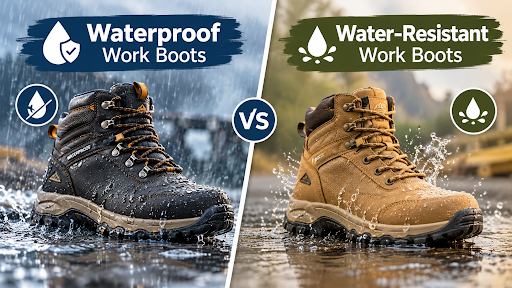
Choosing the right work boots is about more than finding a comfortable pair. If your job involves rain, muddy ground, damp floors, or outdoor work, the type of water protection your footwear provides can make a noticeable difference. However, waterproof and water-resistant work boots are not the same, and understanding the difference can help you make a better buying decision.
Both types can help protect your feet from moisture, but they are designed for different levels of exposure. Water-resistant work boots can be suitable for occasional splashes and light moisture, while waterproof work boots are generally a better option for frequent exposure to wet conditions.
Whether you work in construction, landscaping, a warehouse, or another demanding environment, knowing what each type offers will help you choose footwear that fits your daily routine.
What Are Waterproof Work Boots?
Waterproof work boots are designed to prevent water from entering the footwear under the conditions specified by the manufacturer. Depending on the model, they may use waterproof membranes, treated materials, sealed seams, or a combination of these features.
These boots are particularly useful for workers who regularly encounter rain, muddy paths, wet grass, or damp outdoor surfaces. Keeping water out can help maintain comfort during long shifts and reduce the inconvenience of wet socks.
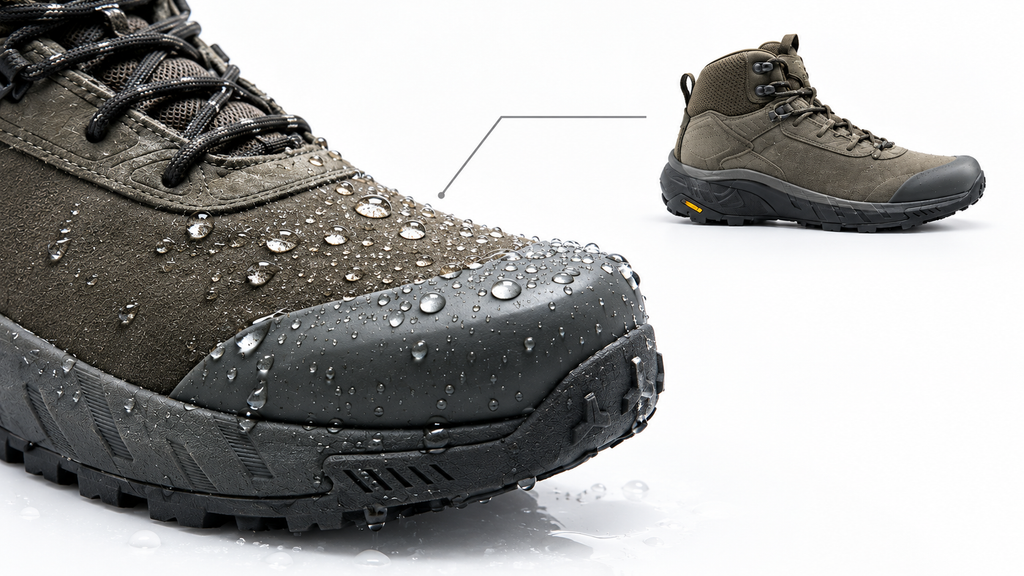
Many waterproof work boots also offer additional features, such as slip-resistant outsoles, cushioned interiors, and protective toe caps. However, these features vary by model, so waterproofing alone should not be taken as proof that a boot provides every type of workplace protection.
Key Benefits of Waterproof Work Boots
- Better protection against moisture: Designed for wet conditions when used within the manufacturer’s specified limits.
- Greater comfort outdoors: Helping keep feet dry can make rainy workdays more manageable.
- Options for demanding jobs: Selected models combine waterproof construction with safety toes and slip-resistant outsoles.
- Versatility: Suitable options are available for construction, landscaping, outdoor maintenance, and other jobs where wet conditions are common.
Waterproof boots can be a practical investment if you regularly work outdoors or encounter substantial moisture during your shift.
What Are Water-Resistant Work Boots?
Water-resistant work boots are designed to help repel or resist water, but their protection has limits. They may use treated leather, coated fabrics, or other materials that reduce how easily moisture penetrates the outer surface.
These boots can work well in environments where exposure to water is occasional or relatively light. For example, they may suit workers who encounter a few splashes, light drizzle, or damp conditions without spending extended periods in heavy rain.
However, water resistance does not mean a boot can keep water out indefinitely. Prolonged exposure, deep puddles, or saturated materials may allow moisture to reach the inside.
Key Benefits of Water-Resistant Work Boots
- Useful for light moisture: They can help protect against minor splashes and damp conditions.
- Practical for everyday tasks: Suitable for some indoor jobs and work environments with limited water exposure.
- Different design options: Available in various materials, styles, and safety configurations.
- A useful alternative: They may be sufficient when full waterproof protection is not necessary for the job.
The level of protection depends on the particular boot, so always check the manufacturer’s description before deciding whether it suits your working conditions.
Waterproof vs. Water-Resistant Work Boots: A Comparison
The main difference comes down to how each type is designed to handle moisture. Use this table to compare their typical features before choosing a pair.
| Waterproof Work Boots | Water-Resistant Work Boots |
| Water Protection: Designed to prevent water from entering under specified conditions. | Water Protection: Helps repel water but offers limited protection against prolonged exposure. |
| Best For: Frequent exposure to rain, mud, and wet working conditions. | Best For: Light rain, occasional splashes, and mildly damp conditions. |
| Heavy Rain: Generally more suitable for working in heavy rain, depending on the design. | Heavy Rain: May allow water to enter during prolonged or heavy exposure. |
| Construction: May feature waterproof membranes, sealed seams, or specialized materials. | Construction: Often uses treated leather, coated fabrics, or water-repellent finishes. |
| Comfort: Helps keep feet dry in wet conditions; breathability varies by model. | Comfort: Can offer good everyday comfort, depending on materials and construction. |
| Durability: Performance depends on material quality, construction, and maintenance. | Durability: Performance depends on material quality, protective coatings, and maintenance. |
| Safety Features: May include steel toes, composite toes, and slip-resistant outsoles. | Safety Features: May also include safety toes and slip-resistant outsoles. |
| Maintenance: Requires proper care to preserve waterproof protection and overall condition. | Maintenance: May require care to maintain its water-repellent finish and overall condition. |
| Ideal Choice: Workers who regularly face wet outdoor conditions. | Ideal Choice: Workers who experience occasional or light moisture. |
Important: These are general differences, not guarantees for every product. Performance varies by construction, condition, and intended use. Always check the specific model’s details.
Other Features to Check Before Buying Work Boots
Water protection is important, but it should not be the only factor guiding your decision. The right pair should also suit your feet, your tasks, and your workplace’s safety requirements.
1. Safety-Toe Protection
Some work environments require footwear that protects the toes against impact or compression. Steel-toe and composite-toe boots are two common options.
Steel toes use a metal protective cap, while composite toes use non-metallic materials. Neither option should be assumed suitable for every job without checking its safety rating and your employer’s requirements.
2. Grip on Wet and Uneven Surfaces
A suitable outsole can help you maintain your footing while walking across wet floors, muddy paths, and uneven ground. Look for slip-resistant features appropriate for your workplace.
Keep in mind that no outsole is slip-proof, and performance can vary on oily, greasy, or debris-covered surfaces.
3. Fit and Comfort
Work boots should feel secure without squeezing your toes or creating uncomfortable pressure. Look for enough toe room, a secure heel, and cushioning suited to how much you walk or stand during your shift.
If you wear thick work socks, try the boots with those socks to get a more realistic sense of the fit.
4. Durability and Maintenance
Materials, stitching, outsole construction, and regular care all affect how well work boots hold up over time.
Clean your boots according to the manufacturer’s instructions, let damp footwear dry naturally, and inspect the soles and seams regularly. For waterproof models, check the care guidance to help preserve their water protection.
How to Maintain Your Work Boots’ Water Protection
Even well-designed work boots need regular care. Dirt, wear, and damage can affect the materials and reduce their ability to repel or block water.
To keep your boots in good condition:
- Remove mud and dirt after wearing them.
- Follow the manufacturer’s cleaning instructions.
- Allow wet boots to dry naturally away from direct heat.
- Inspect seams, uppers, and soles for damage.
- Use only care products suitable for the boot’s materials.
- Replace footwear when significant wear compromises its performance or safety.
For water-resistant boots, follow any recommendations for maintaining the water-repellent finish. For waterproof boots, inspect the construction and follow the manufacturer’s advice if the boots begin allowing water inside.
Make the Right Choice for Your Work Environment
Waterproof and water-resistant work boots both have their place, but they serve different needs. Waterproof work boots are generally better suited to regular exposure to rain, mud, and wet conditions, while water-resistant options can work well for lighter moisture and everyday tasks.
Before choosing, consider your working environment, the level of water exposure, the safety features you need, and how comfortable the boots feel during a full shift.
By comparing these factors and checking each product’s specifications, you can select work boots that provide suitable water protection without overlooking fit, durability, and workplace safety.
Exploring Waterproof and Water-Resistant Work Boots From NORTIV 8
If you’re comparing work boots for different conditions, the NORTIV 8 men’s work boot collection is a useful place to explore available styles.
For example, the Men’s Waterproof Steel Toe Work Safety Boots combine waterproof construction with a steel safety toe, making them an option to consider when both moisture protection and toe protection are important. The collection also lists Men’s Water-Resistant Nano Toe Work Boots, providing an alternative for shoppers looking for a water-resistant design.
These product types illustrate why it’s important to compare the specific features rather than relying on the boot’s name alone. Review the product description, safety specifications, fit information, and intended use before buying.
Explore the NORTIV 8 men’s work boots collection to compare available models and find a pair that matches your working conditions!