Introduction
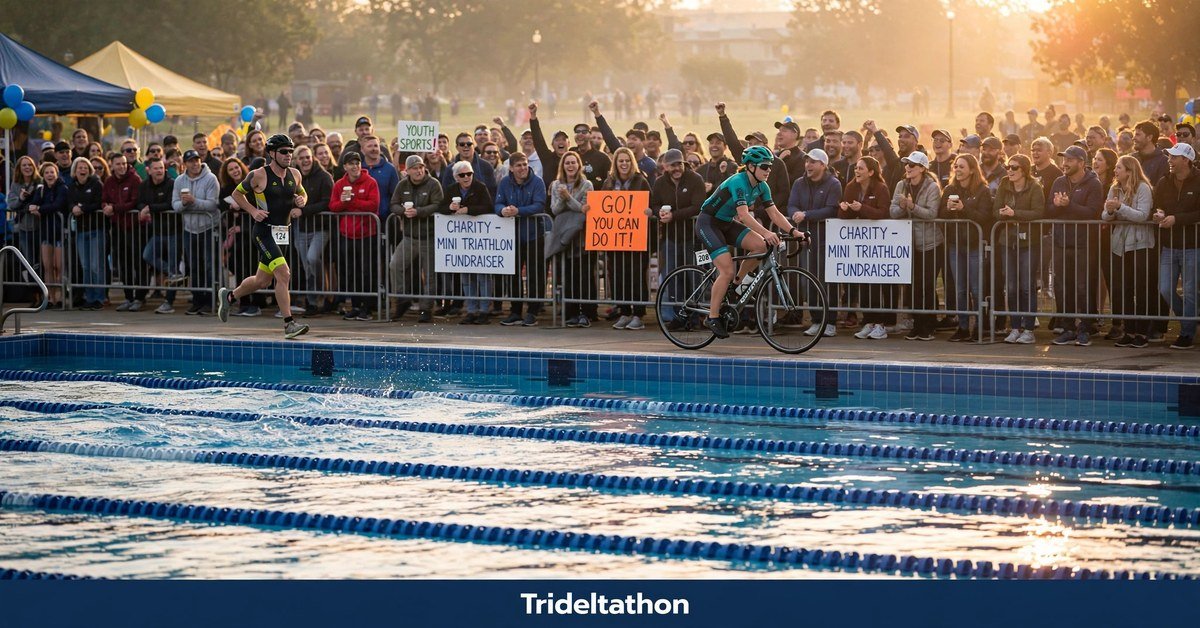
Trideltathon is a community-focused athletic event associated with Delta Delta Delta, commonly known as Tri Delta, and the University of Tennessee in Knoxville, Tennessee. Historically, it combined three endurance activities—a swimming race, a bicycle ride, and a running course—with a charitable mission supporting children's healthcare. The event became known for bringing together university students, athletes, volunteers, and local supporters for a shared purpose.
Unlike many competitive triathlons that focus primarily on athletic performance, Trideltathon placed considerable emphasis on community involvement and fundraising. Its connection to East Tennessee Children's Hospital and Camp Eagle's Nest, a camp serving children affected by cancer and blood disorders, helped establish its identity as more than a sporting competition.
The event's history stretches back to the 1980s, making it a longstanding part of Knoxville's university-area athletic and charitable traditions. Its distinctive indoor swimming component, accessible race distances, and volunteer-supported organization helped attract both experienced participants and people trying a triathlon for the first time.
Although the original event's format was disrupted in 2020, its history remains an example of how university communities can combine recreational sport, philanthropy, and local engagement. Understanding Trideltathon involves looking at its origins, race structure, charitable purpose, community impact, and subsequent developments.
Quick Information Table
| Detail | Information |
|---|---|
| Event name | Trideltathon |
| Event type | Sprint-style triathlon and charity fundraiser |
| Location | Knoxville, Tennessee, United States |
| University connection | University of Tennessee |
| Associated organization | Delta Delta Delta (Tri Delta) |
| Historical beginning | Approximately 1984 |
| Main activities | Swimming, cycling, and running |
| Swimming format | Indoor pool swim |
| Historical race distances | 400-meter swim, 6-mile bike ride, 3-mile run |
| Charitable beneficiary | East Tennessee Children's Hospital |
| Notable fundraising initiative | Camp Eagle's Nest |
| Main participants | Students, recreational athletes, community members, and volunteers |
| Historical status | Original race format affected by cancellation in 2020 |
| Lasting significance | University athletics, community service, and children's healthcare fundraising |

What Is Trideltathon?
Trideltathon was a short-distance triathlon held in Knoxville, Tennessee, with a strong connection to the University of Tennessee and its Tri Delta sorority chapter. The name combines Tri Delta's identity with the word "triathlon," reflecting the event's relationship with both athletic participation and charitable service.
A triathlon traditionally consists of three consecutive disciplines: swimming, cycling, and running. Trideltathon followed this familiar structure but used manageable distances and an indoor swimming pool, giving the competition a distinctive character.
The event appealed to people with different levels of athletic experience. Experienced triathletes could challenge themselves against the clock, while newcomers could experience a multisport competition without the longer distances associated with many endurance races.
Its charitable purpose was equally important. Participants were not simply competing to finish first; they were also helping raise money for children's healthcare initiatives in East Tennessee.
Why Trideltathon Was Different
Several characteristics distinguished Trideltathon from a conventional road race or large-scale triathlon:
Three athletic disciplines: Participants completed swimming, cycling, and running as part of one event.
An indoor swimming component: The pool-based swim provided a controlled alternative to swimming in open water.
University involvement: The event was closely associated with the University of Tennessee community.
Charitable fundraising: Proceeds supported children's healthcare and related programs.
Volunteer participation: Members of Tri Delta and other community supporters helped the event operate.
An approachable race format: The relatively short distances made the event attractive to recreational athletes and first-time triathletes.
These features gave Trideltathon a dual identity: it was both an athletic challenge and an opportunity to contribute to a local charitable cause.
History and Origins of Trideltathon
The Event's Beginnings in the 1980s
Historical accounts place the beginning of Trideltathon around 1984. Its early development reflected a combination of university athletics, student participation, and fundraising for children who needed specialized medical support.
Delta Delta Delta, the women's fraternity commonly called Tri Delta, became closely associated with the event through its involvement in organizing and supporting the competition. The university setting helped create opportunities for students to participate as competitors, volunteers, and organizers.
From its early years, Trideltathon was connected to Camp Eagle's Nest, a summer camp serving children affected by cancer and blood disorders. The camp's association with East Tennessee Children's Hospital gave the event a specific local purpose and helped distinguish it from sporting events organized solely for competition.
Growth Into a Knoxville Tradition
Over the following decades, Trideltathon developed into a recurring athletic and fundraising event. Historical reports document its continued operation through multiple editions, with the 2011 competition identified as the 27th annual race.
That milestone provides useful evidence of its longevity. The event was not merely a one-time student initiative; it became a recognizable part of the Knoxville community's charitable sporting calendar.
Its continued association with the University of Tennessee helped preserve its identity across successive student generations. Participants could change from year to year, but the underlying combination of physical activity, volunteer service, and charitable fundraising remained central to the event.
The Significance of the 2020 Cancellation
The 2020 edition marked an important interruption in Trideltathon's history. Organizers announced that the race would be canceled after pandemic-related disruption and difficulties finding a suitable alternative date.
The cancellation affected more than the competitive schedule. It also interrupted an established opportunity for students, volunteers, and local athletes to come together around children's healthcare fundraising.
Historical cancellation information described options for registered participants, including refunds, transferring fees to other races, or directing their entry payments toward charitable support. These arrangements reflected the practical challenges of managing a community sporting event during an unprecedented disruption.
The cancellation is an important distinction when discussing the event today: historical information about Trideltathon should not automatically be treated as confirmation that the original race is currently operating.
Trideltathon Race Format and Distances
One of the most recognizable features of Trideltathon was its compact three-part race structure. Historical descriptions identify the event as a short triathlon with a pool swim, a bicycle course, and a campus-area run.
1. Swimming: 400 Meters
The swimming portion traditionally covered approximately 400 meters in an indoor university pool. Unlike open-water swimming, this format took place in a more controlled environment.
A pool swim can make a triathlon easier to approach for people who are uncomfortable swimming in lakes or rivers. Participants can concentrate on their technique, breathing, and pacing without having to manage currents, waves, or changing open-water conditions.
The swimming stage still requires preparation. Competitors benefit from practicing continuous swimming, learning to maintain a consistent pace, and becoming comfortable with the pool environment.
2. Cycling: 6 Miles
The second discipline was a bicycle ride of approximately six miles. After completing the swim, participants transitioned to cycling, where endurance, equipment readiness, and pacing became important.
Although six miles is relatively short compared with many long-distance cycling events, participants still needed to consider road awareness, safe riding practices, and the demands of moving between disciplines.
Cycling also introduced a practical preparation requirement: competitors needed a suitable bicycle and had to ensure that their equipment was safe and ready for the course.
3. Running: 3 Miles
The final stage was a three-mile run, completing the three-discipline competition. The run tested participants' ability to maintain a steady pace after swimming and cycling.
Running after cycling can feel more demanding than an ordinary standalone run because the legs have already been working through the earlier stages. Training that combines cycling and running can help athletes become more comfortable with this transition.
The campus-area setting also contributed to the event's community character, connecting the competition with the university environment.
Understanding the Combined Distance
The historical race distances were approximately:
| Discipline | Distance |
|---|---|
| Swimming | 400 meters |
| Cycling | 6 miles |
| Running | 3 miles |
These figures describe the historically reported format, not a guarantee of the course specifications for a current event. Anyone considering participation in a revived or successor race should check its particular rules, distances, and arrangements.
Trideltathon's Charitable Mission
Supporting East Tennessee Children's Hospital
Charitable fundraising was one of the defining elements of Trideltathon. The event supported East Tennessee Children's Hospital, a regional healthcare institution serving children and families.
Community fundraising events can help charitable organizations support programs, services, and initiatives that benefit children. They also provide a way for people who may not work in healthcare to contribute through volunteering, participation, and donations.
Trideltathon connected athletic activity with this broader purpose. The race gave competitors a personal goal while helping direct attention and fundraising toward children's health.
The Role of Camp Eagle's Nest
Camp Eagle's Nest was particularly important to the event's historical identity. The program serves children affected by cancer and blood disorders, offering a summer-camp experience tailored to their needs.
For children managing serious illnesses, recreational opportunities and social connection can be valuable parts of life beyond clinical treatment. Programs such as specialized camps can create opportunities for friendships, shared activities, and memorable experiences in a supportive environment.
Trideltathon helped support this mission by turning a sporting competition into a fundraising opportunity. Historical records indicate that the 27th annual event in 2011 raised more than $10,000 for Camp Eagle's Nest.
That figure demonstrates the event's tangible fundraising potential, although it should not be interpreted as the total amount raised across all editions.
How Athletic Events Can Support Charities
Trideltathon illustrates several ways sporting events can contribute to charitable causes:
Entry fees: Registration payments can provide a source of fundraising revenue.
Community donations: Supporters may contribute because they believe in the beneficiary's mission.
Volunteer engagement: Student and community volunteers can help reduce organizational demands and expand participation.
Public awareness: Participants can introduce new audiences to a charity's work.
Recurring involvement: Annual events can build lasting relationships between universities, local organizations, and supporters.
The exact fundraising arrangements may vary between events. Nevertheless, Trideltathon's historical model demonstrates how recreational sport can serve a purpose beyond competition.
The Role of Delta Delta Delta in Trideltathon
Delta Delta Delta, commonly known as Tri Delta, is a women's fraternity founded at Boston University in 1888. Its values include truth, self-sacrifice, and friendship, with a longstanding commitment to philanthropy and community service.
The organization's connection to Trideltathon reflects how collegiate chapters can use campus activities to support causes beyond their immediate membership.
Student Volunteers and Event Organization
Volunteers are essential to events involving multiple athletic disciplines. A triathlon may require registration assistance, course coordination, participant guidance, equipment arrangements, and general logistical support.
Tri Delta's involvement helped connect student service with athletic participation. Members could contribute without necessarily competing themselves, allowing the event to engage people with different interests and abilities.
This model also provided practical opportunities for students to develop organizational skills, teamwork, communication, and event-planning experience.
A Local Event With a Broader Philanthropic Context
Trideltathon's local charitable focus fits within Tri Delta's wider commitment to supporting children's healthcare.
The organization has a longstanding relationship with childhood cancer initiatives and St. Jude Children's Research Hospital. Its national philanthropic work also includes supporting local and regional children's hospitals and pediatric cancer programs.
However, it is important to distinguish the event's specific historical beneficiary from Tri Delta's broader charitable activities. Trideltathon was particularly associated with East Tennessee Children's Hospital and Camp Eagle's Nest; it should not be assumed that all money raised through the event went directly to St. Jude.
Who Could Participate in Trideltathon?
Historically, Trideltathon's relatively short distances made it suitable for a range of recreational athletes. Its university connection and community-oriented mission also helped make it relevant to people who were interested in charitable participation as well as sport.
Potential participants included:
University students interested in endurance sports.
Recreational runners and cyclists seeking a new challenge.
Experienced triathletes wanting to participate in a shorter race.
First-time competitors interested in multisport events.
Community members who wanted to support children's healthcare.
Volunteers interested in sports administration and charitable service.
Participation requirements, registration fees, eligibility rules, and equipment requirements depended on the specific edition. Historical descriptions alone cannot establish the rules for any present-day event.
Training and Preparation for a Trideltathon-Style Race
Although the original event's current status requires verification, its historical format provides a useful example for anyone preparing for a similar sprint-style triathlon.
Build Fitness Across All Three Disciplines
Training should include swimming, cycling, and running rather than concentrating on just one activity. Beginners can start with manageable sessions and gradually increase their duration as their fitness improves.
Consistency is generally more useful than attempting very demanding workouts without preparation. Rest and recovery also matter, especially when introducing several forms of exercise into a weekly routine.
Practice Transitions
A triathlon involves more than completing three separate activities. Participants must also move between them efficiently.
Practicing the transition from swimming to cycling and from cycling to running can help competitors become familiar with the changes in equipment, movement, and pacing.
Prepare Equipment in Advance
For a race following Trideltathon's historical format, preparation might include:
A comfortable swimsuit and suitable swimming equipment.
A roadworthy bicycle and properly fitted helmet.
Running shoes appropriate for the participant.
Weather-appropriate clothing.
Water and other permitted hydration supplies.
Familiarity with the event's course and safety rules.
Specific equipment requirements should always be confirmed with the organizer of the event being entered.
Focus on Safety and Sustainable Progress
Beginners should prioritize safe technique and gradual improvement rather than trying to achieve a particular finishing time immediately. Swimming ability, bicycle handling, hydration, and awareness of course instructions are all important considerations.
Anyone returning to exercise after a long break should choose a training level appropriate to their current fitness and seek qualified guidance if needed.
Latest Updates and the Current Status of Trideltathon
The most important development in Trideltathon's recent history is the disruption of the original race in 2020. Available historical accounts describe its cancellation during the COVID-19 pandemic, and this means its earlier annual schedule cannot be assumed to continue unchanged.
Later coverage has also described TriDeltaRUN, a five-kilometer running event associated with the Tri Delta community and Knoxville-area charitable activities. This represents a related way of maintaining the connection between physical activity and fundraising, but a 5K run is not the same competition as the original swim-bike-run triathlon.
As of October 2026, historical descriptions establish Trideltathon's legacy, but they do not by themselves confirm that the original triathlon has resumed, its next scheduled date, or its current registration arrangements.
Anyone interested in participating should verify the latest event announcement, the organizer's identity, the charitable beneficiary, and the race format before making plans. It is particularly important to distinguish a historical Trideltathon edition from a newer event that shares its community or philanthropic connections.
Why Trideltathon Remains Significant
Trideltathon's importance extends beyond its race distances. It offers a useful example of how university organizations, recreational athletes, charitable institutions, and volunteers can work together around a shared objective.
Its historical contribution can be understood through several themes.
Promoting Accessible Athletic Participation
A short, pool-based triathlon can make multisport competition feel more approachable than a long-distance event. The format offers participants a chance to develop confidence across three disciplines while pursuing a defined personal challenge.
Strengthening Community Connections
University-based charity events can connect students with local organizations and residents. These relationships help create opportunities for volunteering, fundraising, and shared experiences outside ordinary academic life.
Supporting Children's Healthcare Initiatives
The association with East Tennessee Children's Hospital and Camp Eagle's Nest gave Trideltathon a meaningful charitable purpose. Its documented fundraising activity demonstrates how local athletic participation can contribute to programs supporting children affected by serious illnesses.
Preserving a Tradition of Service
The event's decades-long history reflects the value of recurring community initiatives. Even when circumstances interrupt an established event, its charitable purpose and organizational experience can influence later activities.
Frequently Asked Questions About Trideltathon
What does Trideltathon mean?
Trideltathon is the name of a historical triathlon associated with the Tri Delta sorority and the University of Tennessee in Knoxville. The name combines Tri Delta's identity with the multisport concept of a triathlon.
Where was Trideltathon held?
The event was held in Knoxville, Tennessee, with the University of Tennessee serving as its central institutional connection. Historical descriptions identify the university's Student Aquatic Center as the main race site.
What were the original Trideltathon race distances?
The historically reported course consisted of a 400-meter swim, a six-mile bicycle ride, and a three-mile run.
Which charity did Trideltathon support?
The event was associated with East Tennessee Children's Hospital, particularly its Camp Eagle's Nest program for children affected by cancer and blood disorders.
When did Trideltathon begin?
Historical accounts place its beginning around 1984. The 27th annual edition was documented in 2011, supporting its history as a recurring community event.
Is Trideltathon still held today?
The original event was canceled in 2020, and the historical information available does not independently confirm that the same triathlon format has returned. Related running events, including TriDeltaRUN, have been described in later coverage, but their schedules and arrangements should be verified separately.
Conclusion
Trideltathon was a distinctive Knoxville athletic event that combined swimming, cycling, and running with a charitable mission supporting children's healthcare. Closely associated with Delta Delta Delta and the University of Tennessee, it developed into a longstanding community tradition after beginning in the 1980s.
Its historical 400-meter swim, six-mile bicycle ride, and three-mile run made it a compact alternative to longer triathlons, while its fundraising connection to East Tennessee Children's Hospital and Camp Eagle's Nest gave participation a purpose beyond athletic achievement.
Although the original race was disrupted in 2020 and its current status should not be assumed, Trideltathon remains a meaningful example of the relationship between student service, recreational sport, and local philanthropy. Its legacy demonstrates how community events can bring people together to pursue personal goals while contributing to a cause that matters.