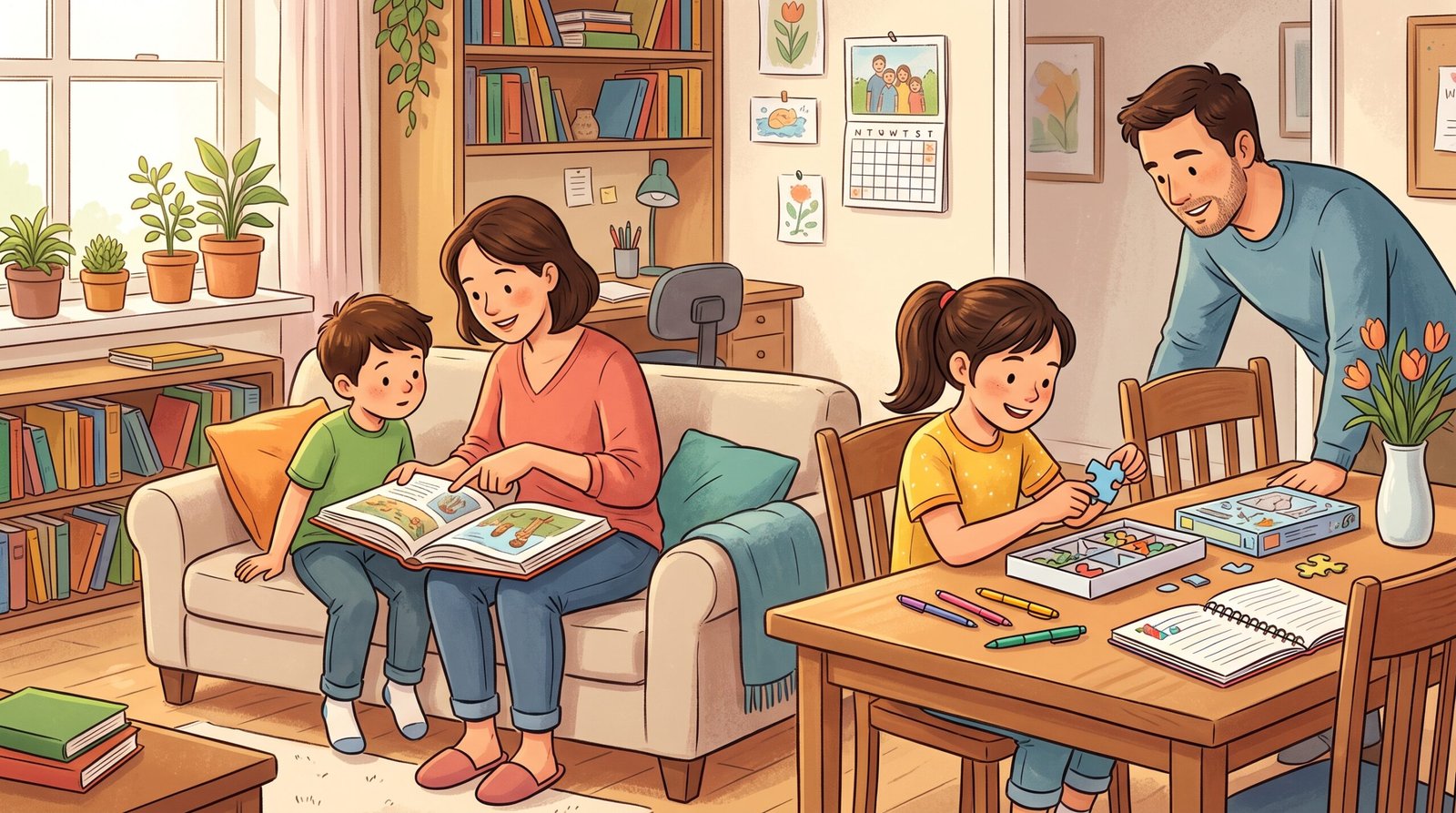
Every parent wants their child to do well in school. But good grades are only part of the picture. What really matters is whether kids learn how to learn: whether they stay curious and feel brave enough to try something hard.
Every child is different. One loves a good book, another would rather tackle a puzzle or dig around outside, and that’s completely normal. You don’t need pricey materials, just a few small changes at home. Here are ten to try.
1. Make Reading Part of Everyday Life
Reading helps children pick up new words, imagine other worlds and express themselves. But when it feels like homework, kids push back. So keep it light: read a bedtime story together, let your child choose their own library book, or chat about a character they liked.
Looking for something to read? Try these short stories for kids. And forget page counts. The real aim is for your child to enjoy it.
2. Build a Routine That Actually Works
Kids feel calmer when they know what the day looks like. But that doesn’t mean scheduling every minute. After school, most children need to unwind with a snack or a bit of play before they can focus. Then you might set a regular homework slot, followed by reading or something creative.
Stay flexible, too. Some days are simply busier, and that’s fine. A routine should make family life easier, not add stress.
3. Teach How to Study, Not Just What to Study
Ever watched a child read the same page three times and still be unable to say what it was about? Looking at information isn’t the same as understanding it. Try asking them to close the book and explain the lesson in their own words. You can also encourage them to:
- Review lessons regularly instead of cramming before exams.
- Try practice questions after each topic.
- Jot down key points in their own words.
- Explain tricky ideas to a parent, sibling or friend.
Older students may want more structure, and this guide to effective study techniques for students has plenty of useful ideas. Just remember that every student studies a little differently.
4. Turn Everyday Moments into Learning
Learning doesn’t only happen at a desk. Ask your child to work out the total at the shop and you’ve sneaked in a maths lesson. Cooking brings in fractions, gardening raises questions about plants and weather, and a family trip is a chance to explore maps. You don’t have to turn everything into a lesson, though.
5. Welcome Their Questions
Children ask an astonishing number of questions and it can test your patience. But when they wonder why it rains or why the Moon changes shape, they’re making sense of the world. Instead of answering straight away, explore it together. Ask what they think is happening, try a simple experiment, or find a book that explains it. They learn that not knowing is just a starting point.
6. Help Them Focus Without the Battle
Focus is hard when the TV and phones are always within reach. You can’t remove every distraction, but you can teach children when it’s time to concentrate. Start with a quiet corner, good light and a proper chair. During study time, put toys away and mute notifications. Younger kids may need short bursts with movement breaks. Nobody concentrates perfectly all the time.
7. Let Mistakes Be Part of Learning
Nobody enjoys getting an answer wrong, and some children avoid difficult questions for fear of it. Focus on progress, not perfection. If your child gets a maths problem wrong, ask them to walk you through their thinking before pointing out the error. Often they missed just one step. Praise specific efforts, like sticking with a hard task, and avoid comparing them with siblings or classmates. When mistakes stop feeling like failure, children take on challenges more willingly.
8. Make Time for Play, Exercise and Rest
It’s tempting to fill every hour with tuition and revision. But children also need outdoor play, sport, creative time, family time and enough sleep. Playtime shouldn’t be a reward earned after every assignment. Make it a normal part of the day, and rested children will return to learning with fresh energy.
9. Set Small, Realistic Goals
A child who says “I want to be great at maths” may have no idea where to begin. Small goals are easier: ten minutes of multiplication a day, one short story each evening, a few new words each week. Check in now and then and celebrate improvements. If a goal proves too hard, adjust it rather than calling it a failure.
10. Make Home a Place Where Learning Matters
Children watch what adults do. When you show curiosity, read for pleasure or get excited about something you discovered, they see that learning doesn’t stop when school does. Share something you learned today and ask what they found interesting at school, not just about marks.
Listen when they describe their struggles, too. They may need extra help or a different approach, and teachers can help. Above all, don’t make every conversation about performance. Children should feel their efforts matter, even when they get things wrong.
Conclusion
Strong learning habits don’t appear overnight. They grow from small things repeated over time, with plenty of encouragement. You don’t have to get everything right, and your child doesn’t need a perfect schedule. What matters is a home where curiosity is welcome, effort is noticed and learning feels worthwhile. Children who enjoy discovering new things gain something better than a good report card: the confidence to keep learning for life.