
Statens Luftfartsvæsen, internationally known as the Civil Aviation Administration Denmark (CAA-DK), was for decades the Danish government’s authority responsible for civil aviation throughout the Kingdom of Denmark. From its headquarters in Copenhagen, the agency supervised all aspects of civil aviation — from air traffic control and aircraft certification to pilot licensing and airport oversight — covering not only Denmark itself but also the autonomous territories of Greenland and the Faroe Islands. Although the administration was merged into the Danish Transport Authority in 2010, its legacy continues to shape how Danish aviation is regulated today. This article explores the history, core responsibilities, organizational structure, and lasting impact of Statens Luftfartsvæsen.
Quick Information Table
| Aspect | Details |
|---|---|
| Official name | Statens Luftfartsvæsen |
| English name | Civil Aviation Administration Denmark |
| Abbreviation | SLV / CAA-DK |
| Country | Denmark |
| Jurisdiction | Denmark, Greenland, and the Faroe Islands |
| Headquarters | Copenhagen, Denmark (Ellebjergvej 50, 2450 København SV) |
| Parent authority | Danish Ministry of Transport |
| Main responsibilities | Regulation of civil aviation, safety oversight, licensing and certification, airport supervision |
| Notable operation | Directly operated Bornholm Airport |
| Merger date | 1 November 2010 |
| Successor | Danish Transport Authority (Trafikstyrelsen), now the Danish Civil Aviation and Railway Authority |
The History of Statens Luftfartsvæsen
Early Origins in a Growing Aviation Era
The roots of Statens Luftfartsvæsen stretch back to the early 20th century, a period when aviation was rapidly transforming from an experimental novelty into a practical means of transport. As aircraft technology advanced and air traffic increased, Denmark recognized the need for a dedicated government body to oversee the safety and orderly development of its airspace. The administration evolved steadily over the decades, adapting to each new era of aviation — the rise of commercial passenger flights, the introduction of advanced air traffic control systems, and the adoption of modern international safety standards.
Growth Alongside Commercial Aviation
As commercial aviation expanded after the Second World War, Statens Luftfartsvæsen grew in importance. Denmark’s strategic position between continental Europe and Scandinavia made its airspace and airports significant nodes in international air travel. The agency developed regulatory frameworks covering airlines, airports, pilots, and technical personnel, ensuring that Danish aviation kept pace with the best practices emerging internationally.
Cooperation with International Aviation Bodies
Throughout its existence, Statens Luftfartsvæsen acted as Denmark’s link to the global aviation system. It represented Danish interests in cooperation with international aviation organizations and worked to align national rules with international standards. This bridging role helped Danish airlines, airports, and aviation professionals operate seamlessly within the global aviation network while maintaining Denmark’s reputation for safety and reliability.
The 2010 Merger
On 1 November 2010, a major administrative reform brought the history of Statens Luftfartsvæsen as an independent agency to a close. The Danish Transport Authority (Trafikstyrelsen) and the Civil Aviation Administration Denmark were merged into a single administration. The new combined authority continued to perform the same aviation tasks from the same address, reflecting a political decision to integrate the transport sectors under one administrative body. Later reorganizations changed the successor’s name and portfolio, and today the aviation responsibilities are carried by the Danish Civil Aviation and Railway Authority.
Core Responsibilities and Functions
Regulation of Civil Aviation
The primary function of Statens Luftfartsvæsen was the regulation of all civil aviation activities within Danish jurisdiction. This wide mandate covered commercial airline operations as well as private and general aviation. Through comprehensive rules and enforcement, the agency maintained order and safety in Danish airspace and ensured that every operator — from large airlines to private pilots — worked under a consistent regulatory framework.
Safety Oversight and Standards Enforcement
Safety stood at the very heart of the organization’s mission. Statens Luftfartsvæsen maintained rigorous oversight mechanisms to ensure that all aviation operators complied with established safety standards. Regular inspections, audits, and monitoring activities were designed to prevent accidents and keep safety levels high across the entire aviation sector. The agency also implemented safety reporting systems, encouraging pilots, air traffic controllers, mechanics, and airport operators to report safety-relevant occurrences so that lessons could be learned and future incidents prevented.
Air Traffic Control and Airspace Management
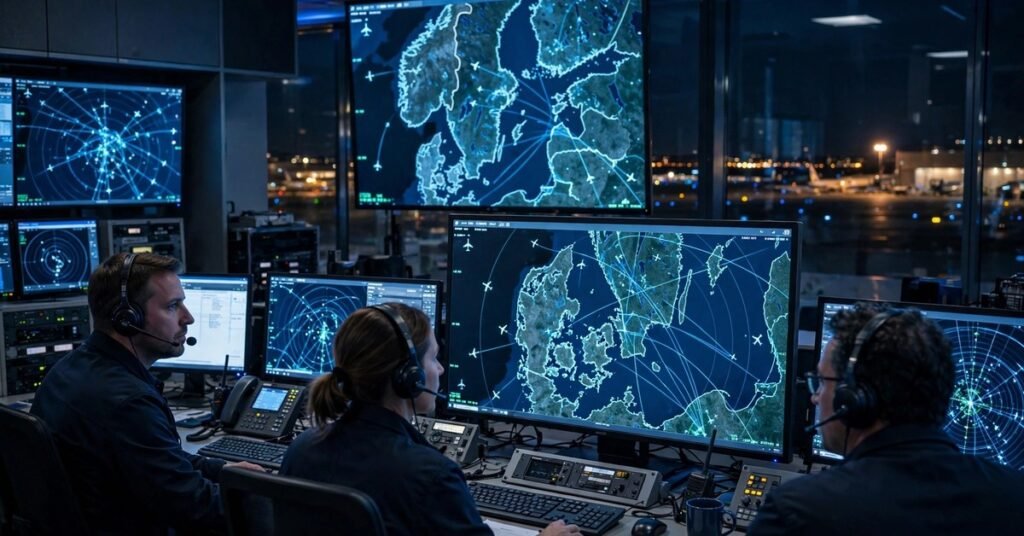
Ensuring safe navigation and efficient air traffic management was a central responsibility. The agency worked to guarantee that Denmark’s airspace was organized and supervised in line with international requirements, supporting the smooth flow of traffic through one of Northern Europe’s busiest corridors. Air traffic controllers and certified technical personnel fell under its regulatory scope.
Licensing and Certification
Statens Luftfartsvæsen held authority over all aviation licensing and certification processes in Denmark. This included the certification of aircraft, the licensing of pilots, cabin crew, air traffic controllers, and aircraft mechanics, as well as the certification of airports. The thorough certification processes ensured that only qualified professionals and properly equipped aircraft operated within Danish airspace. Certificates of airworthiness, pilot licences, and airport certifications were all issued under its authority.
Airport Supervision and Operations
Managing airport operations formed another critical area of responsibility. The agency oversaw operational standards at airports across Denmark, making sure they met international requirements in areas ranging from runway maintenance to passenger service protocols. In a distinctive hands-on role, Statens Luftfartsvæsen also directly operated Bornholm Airport, giving it practical insight into the challenges of airport management that informed its broader regulatory policies.
Environmental Responsibilities
As aviation grew, so did awareness of its environmental impact. The administration addressed environmental concerns related to aviation, including noise pollution around airports and aircraft emissions. These responsibilities were essential to balancing the growth of air transport with the interests of local communities and the environment.
Organizational Structure
A Part of the Ministry of Transport
Statens Luftfartsvæsen operated as an agency under the Danish Ministry of Transport. Its head office was located in Copenhagen, and it worked within the broader framework of Danish transport policy. Regular coordination with ministry leadership helped keep aviation regulation consistent with the rest of the country’s transport sectors.
Professional Divisions
The agency’s work was divided among specialized divisions covering areas such as flight safety, airworthiness, personnel licensing, air traffic services, airports, and environmental matters. This structure allowed deep expertise in each field while keeping the agency’s overall approach coordinated. The staff included aviation engineers, inspectors, legal experts, and administrative professionals.
Jurisdiction Across the Kingdom
An important feature of the administration was its wide jurisdiction. Unlike many national aviation authorities, it oversaw civil aviation not only in Denmark proper but also in Greenland and the Faroe Islands — vast and logistically challenging areas where aviation is often the only practical means of transport. This extended responsibility underlined the agency’s importance within the Kingdom of Denmark.
Key Achievements and Legacy
Building a Safety Culture
One of the most lasting contributions of Statens Luftfartsvæsen was its work on aviation safety culture. By introducing structured safety reporting and encouraging open reporting among pilots, controllers, mechanics, and airports, the agency helped build a system in which safety information could be shared and analyzed without fear of punishment — a principle that remains central to modern aviation safety management.
Regulatory Foundation for Modern Danish Aviation
The regulations, procedures, and certification systems developed under Statens Luftfartsvæsen formed the foundation on which the merged authority continued to build. After the 2010 merger, the former CAA-DK attended to the same tasks as before, so the expertise and institutional knowledge were preserved within the new Danish Transport Authority.
Denmark’s Reputation in Aviation
Through decades of consistent oversight, the agency helped establish Denmark’s reputation as a safe and reliable aviation hub. Danish airspace, airports, and airlines operated to high standards, supporting the country’s role in international air transport and giving the travelling public confidence in the system.
Statens Luftfartsvæsen in the Modern Era
The Successor Authority
Today, the tasks once handled by Statens Luftfartsvæsen are carried out by the Danish Civil Aviation and Railway Authority (Trafikstyrelsen), the government agency responsible for regulating, planning, and safety in public transport across the Kingdom of Denmark. The authority advises the ministry on policy and strategic development in transport and continues to regulate all civil aviation activity within the country, including airports, aircraft, and pilots.
Why the History Still Matters
Understanding Statens Luftfartsvæsen matters for anyone studying Danish aviation, regulatory history, or the development of European civil aviation oversight. Its story illustrates how aviation regulation matured from simple oversight of a new technology into a complex system of safety management, international cooperation, and environmental responsibility. The merger that ended its independent existence reflects a broader European trend toward integrated transport administration.
Key Takeaways
Statens Luftfartsvæsen was the Danish government agency that regulated civil aviation across Denmark, Greenland, and the Faroe Islands. Headquartered in Copenhagen under the Ministry of Transport, it was responsible for safety oversight, air traffic control, licensing and certification, airport supervision, and environmental concerns — and it directly operated Bornholm Airport. On 1 November 2010, it merged with the Danish Transport Authority, which continues its work today. Its legacy is a strong safety culture and a regulatory foundation that still underpins Danish aviation.