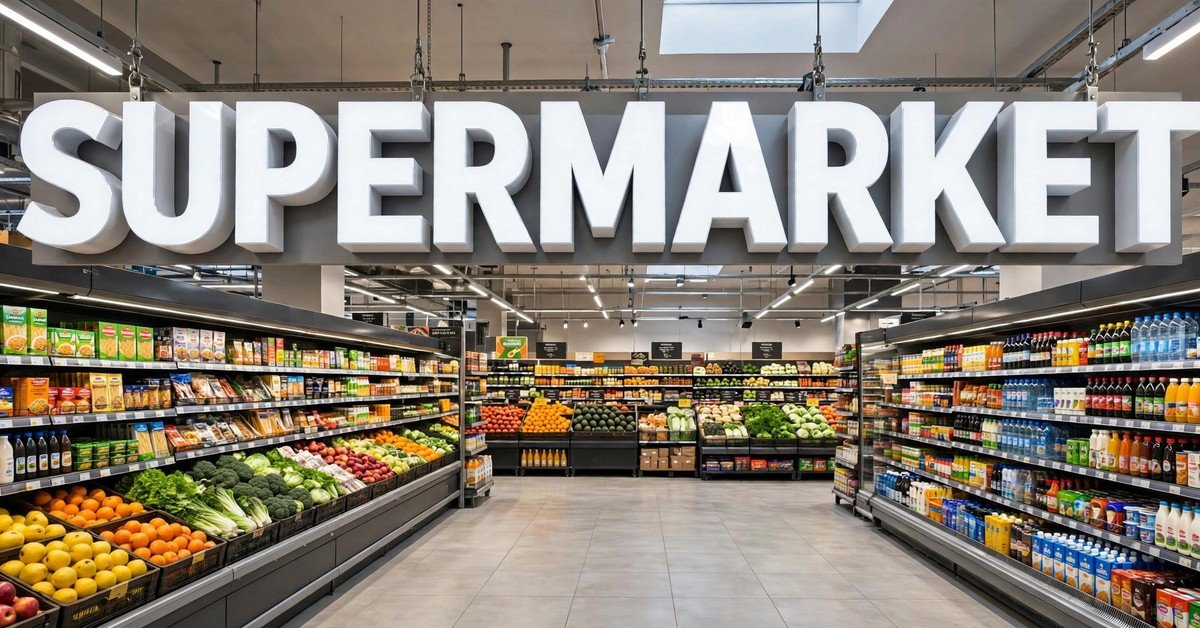
A supermarket is a large retail store where people can purchase a wide variety of food, household products, personal care items, beverages, and everyday essentials in one location. Unlike traditional grocery shops that often relied on customers asking a store worker for products, modern supermarkets generally use self-service layouts where shoppers select products from organized shelves and take them to a checkout area. This simple shopping model has transformed the way households buy food and other necessities.
Supermarkets have become an important part of everyday life because they combine convenience, product variety, competitive pricing, and efficient distribution. A typical supermarket may include fresh produce, meat and seafood, dairy products, bakery goods, frozen foods, canned goods, beverages, snacks, cleaning supplies, personal care products, pet supplies, and other household necessities. Many larger stores also include pharmacies, prepared-food counters, floral departments, banking services, or online grocery pickup facilities.
The supermarket has also changed considerably over time. Self-service shopping, shopping carts, refrigeration, computerized inventory systems, barcode scanning, loyalty programs, online ordering, delivery, and self-checkout have all influenced the modern grocery experience. In 2026, retailers are also exploring artificial intelligence, smaller store formats, improved logistics, and omnichannel shopping experiences as consumer expectations continue to evolve.
Quick Information Table
| Topic | Information |
|---|---|
| Meaning | A large self-service retail store selling food and everyday household products. |
| Main purpose | To provide shoppers with convenient access to a broad selection of essential goods. |
| Typical products | Produce, meat, dairy, bakery items, packaged foods, beverages, household goods, and personal care products. |
| Shopping model | Primarily self-service, supported by staffed checkout and increasingly by self-checkout. |
| Important technologies | Barcode scanners, point-of-sale systems, digital payment, inventory software, mobile apps, and online ordering. |
| Historical development | Modern supermarkets developed from earlier grocery and self-service retail models during the 20th century. |
| Modern direction | Omnichannel shopping, delivery, pickup, automation, smaller formats, personalization, and data-driven retail. |
What Is a Supermarket?
A supermarket is a retail establishment designed to allow customers to purchase many categories of everyday goods during one shopping trip. The defining characteristic is usually the combination of broad product selection and self-service shopping.
Instead of depending entirely on clerks to retrieve merchandise, customers normally walk through aisles, compare products, place selected items into a cart or basket, and pay at the checkout. Products are commonly arranged by category so that shoppers can locate related items efficiently.
The supermarket model is particularly useful for regular household shopping. A customer can purchase ingredients for meals, breakfast products, beverages, cleaning supplies, toiletries, and other necessities without visiting several specialized stores.
History of the Supermarket
From Traditional Grocers to Self-Service
Before modern supermarkets became common, many grocery transactions involved a customer ordering products from a shopkeeper or clerk. Goods could be stored behind a counter, and the employee would select, weigh, measure, or package them.
A major change came with the development of self-service grocery stores. In 1916, Piggly Wiggly opened in Memphis and became an important early example of a fully self-service grocery store. Customers could move through the store and select products themselves, establishing a shopping approach that became fundamental to modern supermarkets.
The Shopping Cart
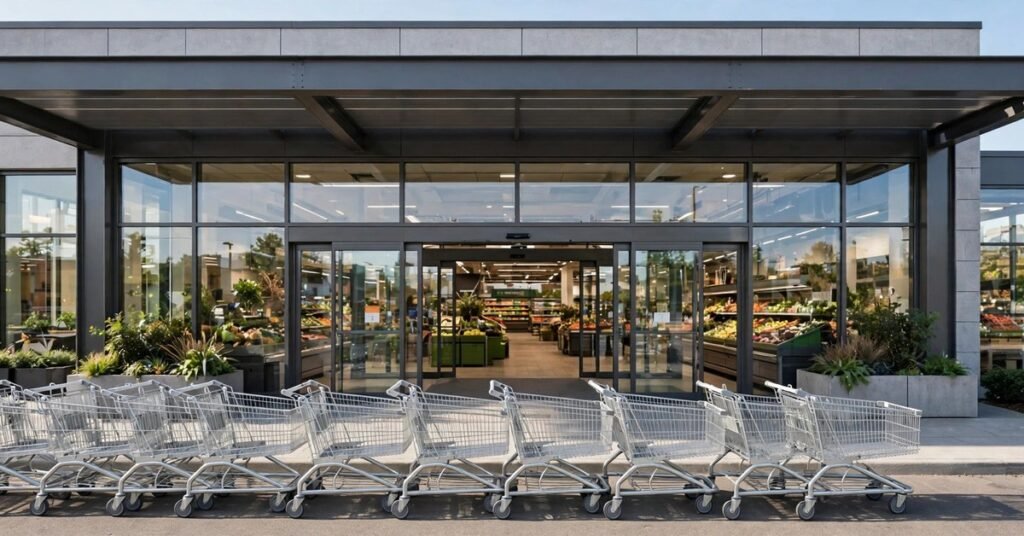
The shopping cart also played an important role in the development of supermarket shopping. In 1937, Sylvan Goldman introduced a shopping cart at a grocery store in Oklahoma City. The invention made it easier for shoppers to carry larger quantities of merchandise and helped support the growth of larger stores and bigger product packages.
Growth of Large Grocery Stores
As roads, refrigeration, food distribution, packaging, and transportation improved, grocery retailers could offer larger selections of products. Supermarkets gradually became larger and more organized, allowing customers to buy fresh and packaged foods under one roof.
Refrigeration was especially important because it allowed stores to maintain products such as meat, dairy products, frozen foods, and fresh produce for longer periods. Better distribution networks also made it possible for retailers to maintain regular supplies across multiple locations.
Important Features of a Modern Supermarket
Wide Product Selection
One of the most recognizable features of a supermarket is its variety. A single store can contain thousands of products across numerous categories. Product selection varies according to store size, location, customer demand, and business strategy.
Common departments include fresh fruits and vegetables, meat, seafood, dairy, bakery, frozen foods, canned goods, cereals, snacks, beverages, household cleaning products, personal care items, and pet supplies.
Organized Store Layout
Supermarkets generally use carefully planned layouts to make shopping easier and to organize products into logical categories. Fresh produce may be located near the entrance, while refrigerated and frozen products occupy dedicated areas. Dry grocery products are commonly organized into aisles.
End-of-aisle displays and promotional areas can also be used to highlight particular products. Seasonal displays may feature products associated with holidays, school seasons, summer activities, or other shopping occasions.
Fresh Food Departments
Many supermarkets distinguish themselves through fresh food departments. Produce sections provide fruits and vegetables, while meat and seafood counters may offer fresh proteins. Bakery departments can provide bread, cakes, pastries, and prepared foods.
These departments require different storage conditions and inventory management practices from shelf-stable grocery products. Temperature control, sanitation, freshness monitoring, and timely replenishment are therefore important parts of supermarket operations.
Checkout Systems
The checkout area has evolved significantly over the history of supermarkets. Traditional cash registers have been supplemented by computerized point-of-sale systems, barcode scanners, electronic payments, mobile payment options, and self-checkout stations.
Barcode scanning became a major milestone in grocery retail. On June 26, 1974, a package of Wrigley’s Juicy Fruit chewing gum was the first retail item scanned using a Universal Product Code at a Marsh Supermarket in Troy, Ohio. Barcode technology subsequently became an important part of retail checkout and inventory management.
How Supermarkets Manage Inventory
Inventory management is one of the most important behind-the-scenes activities in a supermarket. Retailers need enough products available to meet customer demand without creating excessive waste or unnecessary storage costs.
Modern point-of-sale systems can record sales as products are purchased. Retailers can use this information to monitor stock levels, identify fast-moving products, plan replenishment, and understand shopping patterns.
Perishable products require particularly careful management. Fresh produce, meat, dairy, bakery products, and prepared foods have limited shelf lives. Stores therefore need systems for checking dates, rotating stock, reducing unsold inventory, and maintaining appropriate temperatures.
Supermarket Pricing and Promotions
Pricing is another central part of supermarket operations. Stores may use everyday pricing, temporary promotions, coupons, multi-item offers, loyalty discounts, and private-label products to provide different purchasing options.
Private-label products are goods sold under a retailer’s own brand or a brand controlled by the retailer. They can give shoppers another choice alongside national brands and can form an important part of a supermarket’s product strategy.
Promotional pricing can also influence how shoppers plan their trips. Weekly deals, seasonal promotions, digital coupons, and loyalty rewards are increasingly integrated into mobile apps and digital accounts.
Technology in the Modern Supermarket
Self-Checkout
Self-checkout allows customers to scan and pay for many purchases without completing the entire transaction through a traditional staffed checkout. These systems can reduce waiting times in certain situations, although retailers continue to adjust their use based on store operations, customer preferences, security requirements, and transaction complexity.
Online Grocery Shopping
Online grocery shopping has expanded the supermarket beyond the physical store. Customers can browse products through websites or mobile applications, create shopping lists, select pickup windows, or request delivery where those services are available.
This creates an omnichannel model in which physical stores and digital services work together. Customers may research products online, purchase through an app, collect an order at a store, or have products delivered.
Artificial Intelligence and Data
Technology is increasingly being used throughout retail operations. Recent industry research describes growing use of AI-assisted shopping, with consumers using AI tools for product research, reviews, and deals. Retailers are also experimenting with AI and machine-learning systems for logistics, marketing, inventory-related activities, and checkout processes.
Supermarkets and Consumer Convenience
Convenience is one of the central reasons supermarkets remain important. Instead of making separate trips to a butcher, bakery, produce shop, household store, and beverage retailer, customers can often find many necessities in one place.
Extended opening hours, parking facilities, digital payment, online ordering, pickup services, and delivery can make grocery shopping even more convenient. However, the exact services available depend on the individual retailer and location.
Supermarkets and Local Communities
Supermarkets can play an important role in local communities. They provide access to food and household essentials while also creating employment in areas such as sales, stocking, logistics, management, customer service, food preparation, and transportation.
Local supermarkets may also adapt their product selection to the preferences of the surrounding population. This can include regional foods, culturally specific ingredients, locally produced goods, and products designed for particular dietary preferences.
Large supermarket companies can operate across many regions, while smaller grocery retailers may focus on specific communities. Current retail research shows that regional grocery businesses continue to have a significant presence alongside national retailers in the U.S. market.
Current Supermarket Trends
Smaller Store Formats
Not every retailer is focused on building larger stores. Recent industry research identifies a shift toward smaller, community-based formats in several international markets. Smaller stores can help retailers serve specific neighborhoods while managing costs and investing in technology and distribution.
Omnichannel Shopping
Customers increasingly move between physical and digital shopping. A person might discover a product online, visit a store to examine it, and then use a mobile application to purchase it. Another shopper may create an online grocery order and collect it without walking through the store.
Value and Budget Awareness
Price remains an important consideration for many shoppers. Recent consumer research indicates that economic pressure is influencing purchasing behavior, including increased interest in budget-friendly alternatives. Retailers are responding through private-label ranges, promotions, loyalty programs, and different store formats.
Digital and AI-Assisted Shopping
Artificial intelligence is becoming another part of the retail environment. It can support product discovery, personalized recommendations, marketing, logistics, and other operational processes. The technology is still developing, and retailers are experimenting with different ways to integrate it into shopping experiences.
The Role of Supermarkets in the Retail Industry
Supermarkets represent an important part of the broader retail economy. Their operations connect farmers, manufacturers, distributors, transportation providers, technology companies, employees, and consumers.
The industry also demonstrates how retail businesses adapt to changing consumer expectations. The traditional supermarket was primarily a physical location. The modern supermarket can function as a physical store, fulfillment center, pickup location, delivery hub, digital marketplace, and source of customer data at the same time.
In the United States, the broader retail industry continues to operate at enormous scale. For 2026, the National Retail Federation forecast total U.S. retail sales of approximately $5.6 trillion, representing projected growth of 4.4% over 2025. This figure covers retail broadly rather than supermarkets alone, so it should not be interpreted as a supermarket sales figure.
How to Shop Efficiently at a Supermarket
Prepare a Shopping List
A shopping list can help shoppers remember essential products and reduce unnecessary purchases. Organizing the list according to store sections can make the trip more efficient.
Compare Products
Shoppers can compare package sizes, ingredients, nutritional information, unit prices, and product brands before making a purchase. A larger package is not automatically less expensive per unit, so checking the displayed unit price can be useful.
Check Freshness
For perishable foods, shoppers should examine packaging, appearance, storage conditions, and relevant date information. Products requiring refrigeration should be kept at appropriate temperatures throughout storage and transportation.
Use Digital Tools Carefully
Store apps can provide digital coupons, shopping lists, product information, and pickup options. These tools can make shopping more convenient, but customers should understand the terms of promotions and check that discounts have been applied correctly.
Why Supermarkets Continue to Evolve
The supermarket has survived major changes in technology, transportation, consumer habits, and retail competition because the basic need it serves remains consistent: people need reliable access to food and everyday necessities.
What is changing is the way that need is fulfilled. Traditional aisles remain important, but they now operate alongside online ordering, delivery, pickup, mobile payments, loyalty systems, automated checkout, data analytics, and emerging AI tools.
The future supermarket is therefore likely to combine physical and digital shopping rather than depend exclusively on either model. Retailers will continue adapting store sizes, product selections, technology, fulfillment systems, and customer services according to local demand and changing shopping habits.
Conclusion
The supermarket is much more than a place to buy groceries. It is a highly organized retail system that brings together food, household products, technology, logistics, employees, suppliers, and consumers. From the early development of self-service shopping and shopping carts to barcode scanning and today’s digital grocery services, supermarkets have continually changed to make retail shopping more efficient and convenient.
Modern supermarkets combine familiar features such as aisles, fresh food departments, shopping carts, and staffed checkouts with newer services such as self-checkout, mobile applications, online ordering, pickup, delivery, and AI-supported retail operations. As shopping habits continue to develop, supermarkets are likely to remain an important part of everyday life while adapting their formats and services to new consumer expectations.